
Fiat Coupé: the 150 mph front-driver an Ohio designer drew before he “ruined” BMW
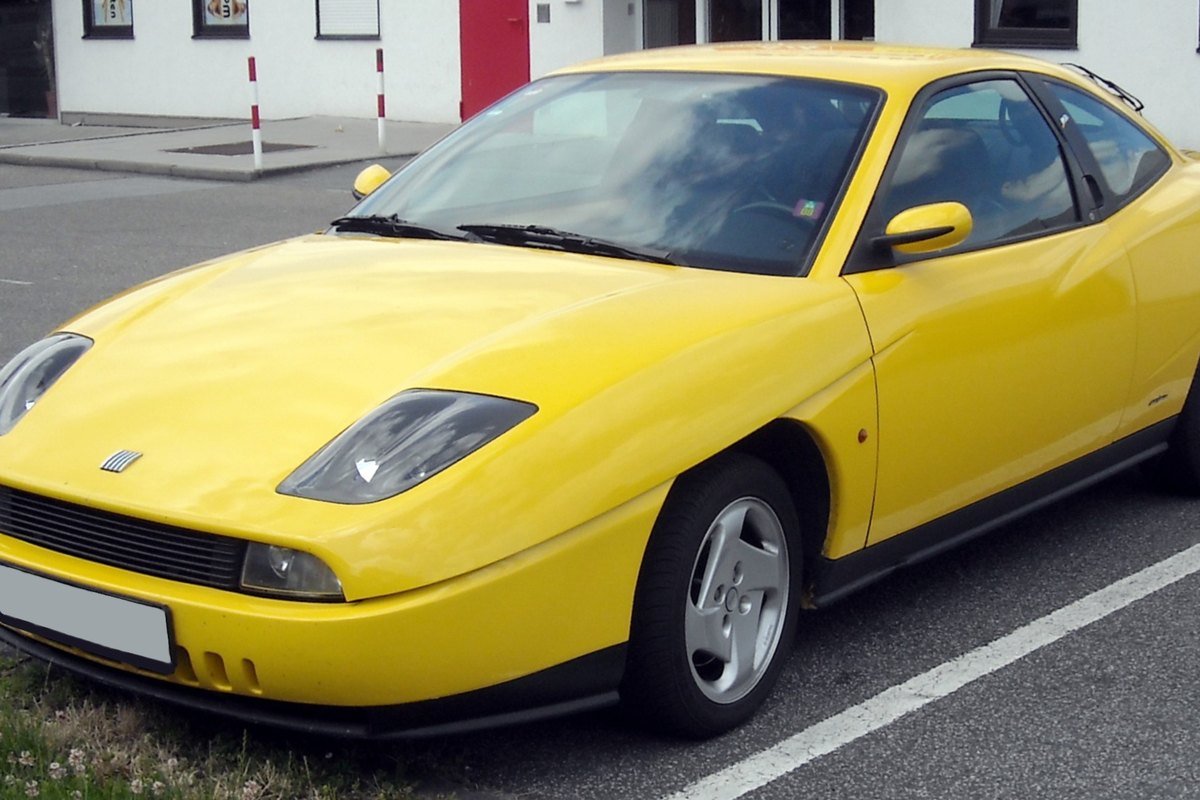
Here is a car that most Americans have never seen in the metal, built by a brand that had packed up and left the United States a decade earlier, drawn by a guy from Ravenna, Ohio, who would later become the most hated man in Munich. It made 220 horsepower, sent every last one of them through the front wheels, and topped out at roughly 155 mph. It was called, with stunning lack of imagination, the Fiat Coupé. And as of this year, every single one ever built is old enough to be imported into the US legally.
If you know Chris Bangle only as the man behind the “Bangle butt” on the 2002 BMW 7 Series, you have only seen the second act. The first act happened in Turin.
The kid from Ohio at Fiat’s design center
Bangle was born in 1956, studied at the Art Center College of Design in Pasadena, and went to Europe to draw cars for Opel before landing at Fiat’s in-house design studio, the Centro Stile, in the mid-eighties. In the early nineties Fiat decided it wanted a proper sports coupé, the first in years from a company known for small, cheap, sensible cars. The push came from the top: Belgian journalist and 1960 Le Mans winner Paul Frère credited Fiat CEO Paolo Cantarella with forcing the project through.
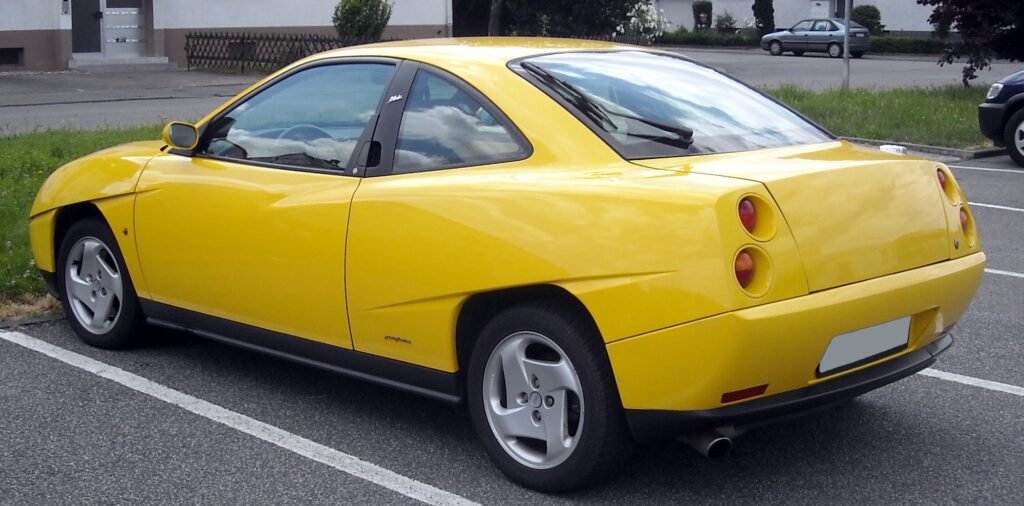
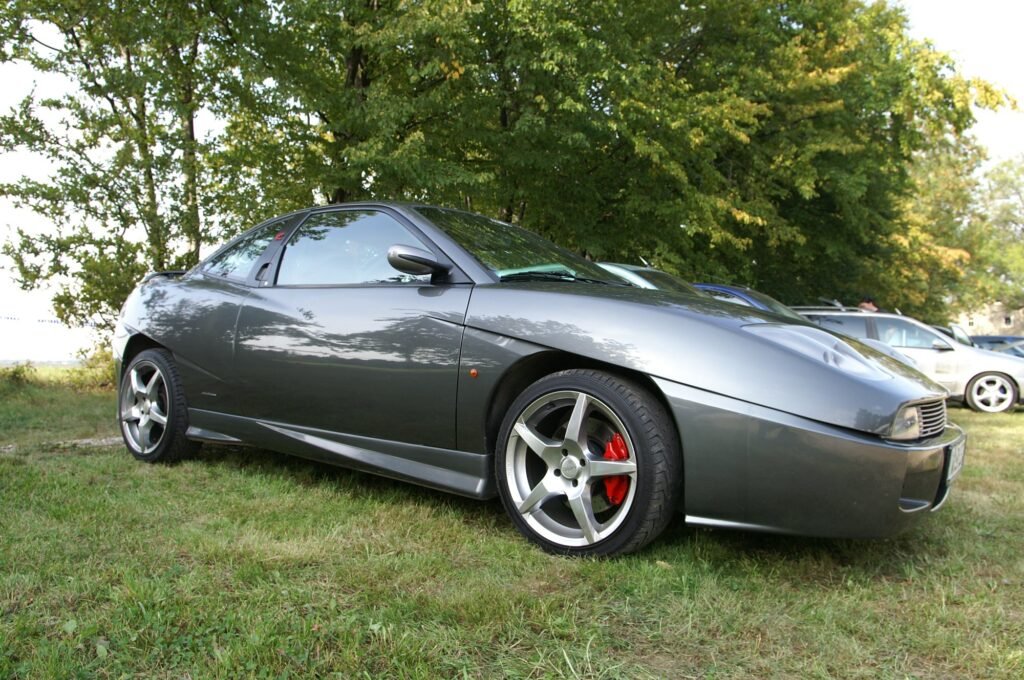
Fiat set up an internal competition. In one corner, its own Centro Stile. In the other, Pininfarina, the Turin coachbuilder that had been dressing Ferraris since the fifties. Pininfarina usually wins these fights. This time it lost. Bangle’s proposal, with diagonal knife-cuts slashed across the front fenders and over the rear wheel arches, a chopped square tail and four round taillights sunk into the bodywork, beat the most famous design house in Italy.
The consolation prize was not bad. Pininfarina got the contract to design the interior and to build the car in its own Turin plant, on a line left free when the Cadillac Allanté program wound down. That is the second time this story touches America, by the way: the plant that had been building bodies for a Cadillac sold in Detroit showrooms ended up assembling a Fiat that never reached them.
Where the losing design went
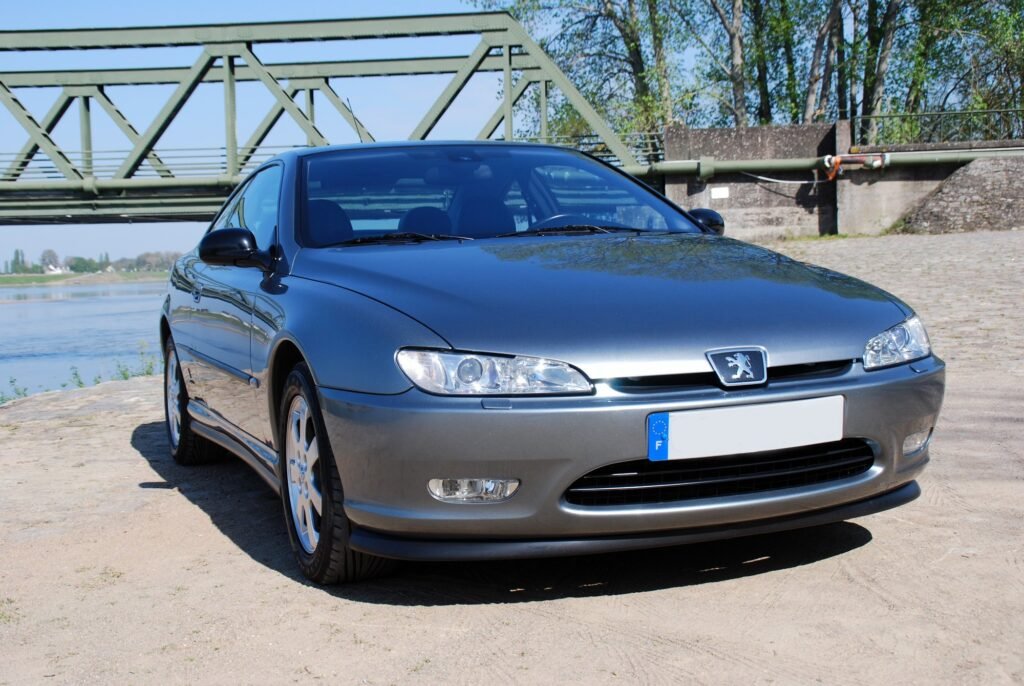
Pininfarina did not throw its rejected Fiat away. It reworked the drawing and sold it to Peugeot, which launched it in October 1996 as the 406 Coupé, a car many people still consider one of the cleanest shapes of the decade. Put the two side by side and you get a rare thing in the car world: the cautious answer and the brave answer to the same brief, both in production at the same time. The cautious one looked better in brochures. The brave one is the one people still argue about.
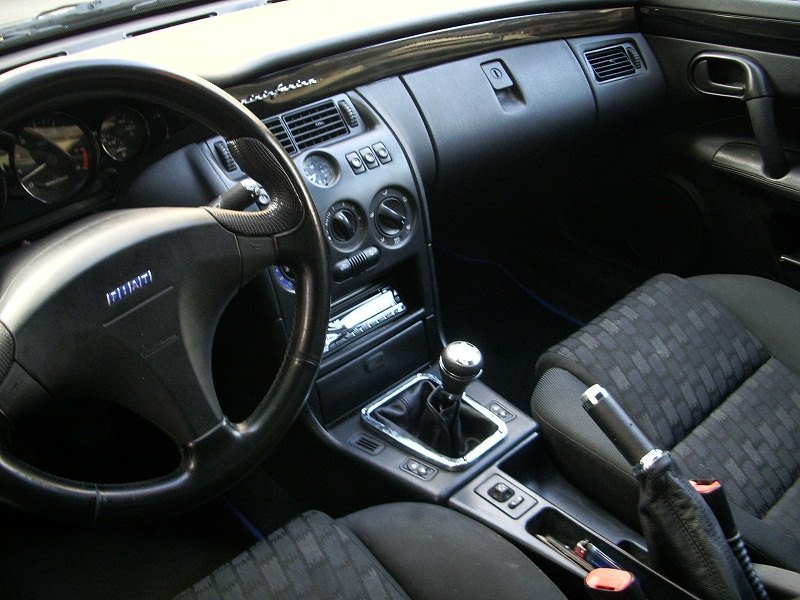
Inside the Fiat, Pininfarina laid a strip of painted steel across the dashboard in the exterior color. In a yellow car it means sitting inside the bodywork, which is exactly the point. Fiat’s Italian ads called it “la macchina,” the machine, and promised “aggressive elegance.” Both were accurate.
Five cylinders, one turbo, front-wheel drive
The Coupé went on sale in Italy in early 1994 with two four-cylinder engines borrowed from the Lancia Delta Integrale: a naturally aspirated 2.0 with 139 PS and a 2.0 turbo with 190 PS. Fast enough. Then, in the fall of 1996, Fiat swapped the fours for something stranger.
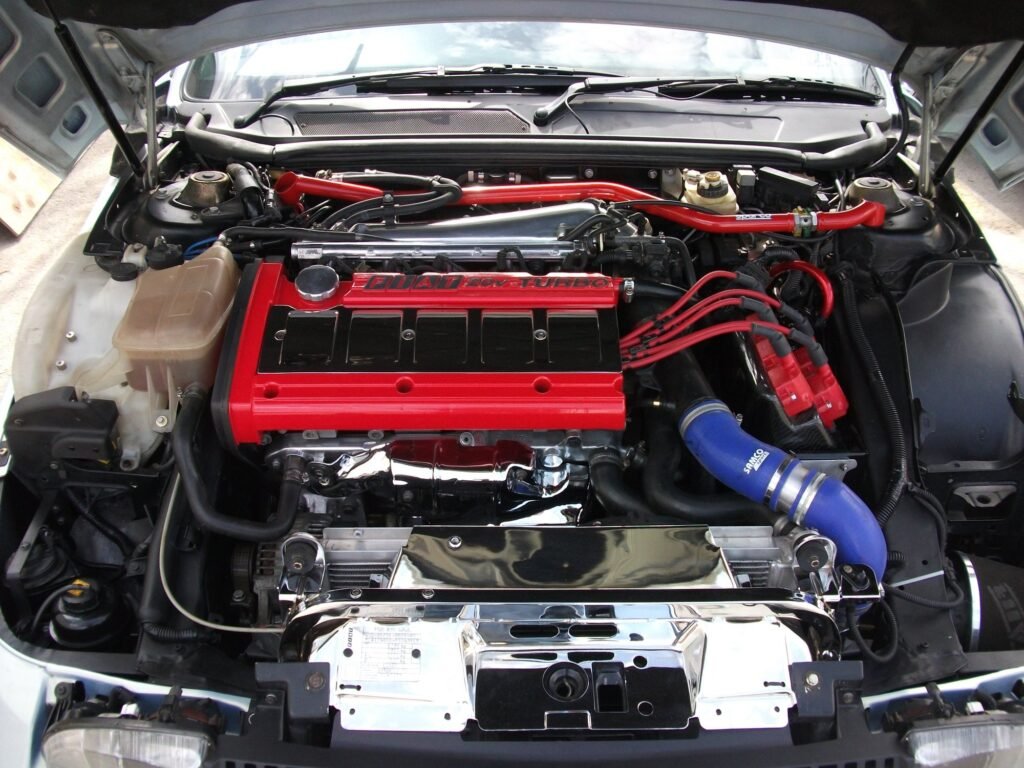
Five-cylinder engines are rare for a reason. They are longer than a four, harder to balance than a six, and only a handful of makers (Volvo and Audi most famously) ever made a habit of them. What you get in exchange is a sound nothing else makes, a lumpy, offbeat howl, and power delivery that feels fuller than the displacement suggests. Fiat’s 2.0-liter five got twenty valves, a counter-rotating balance shaft to calm the vibrations, a Garrett turbocharger and an intercooler. Output: 220 PS (about 217 hp) at 5,750 rpm and 228 lb-ft of torque from just 2,500 rpm.
Fiat claimed 0-62 mph in 6.5 seconds with the five-speed and 6.3 with the six-speed that came later. Autocar measured 0-60 mph in about six seconds and ran its 1996 road test under the headline “Say hello to the new Cossie,” comparing it to the Ford Sierra Cosworth, the European performance icon of the era. The magazine called it the quickest front-wheel-drive production car it had tested. Italy’s Quattroruote clocked a Limited Edition at 252 km/h, which is just under 157 mph.
Now line it up against what America could buy in 1997. An Acura Integra Type R had 195 hp. A Honda Prelude Type SH, also 195. A Ford Probe GT, 164. The Mitsubishi Eclipse GSX had 210 hp, but it sent them to all four wheels. Nobody selling cars in the US was putting 217 hp through the front tires alone, and you can see why when you drive one.
The torque steer problem
Put a lot of torque through the same wheels that steer the car and the steering wheel starts to fight you. Floor it in second over a crowned road and the car tugs left or right, because one front tire grips more than the other. Engineers call it torque steer. Owners call it something less polite.
Fiat’s fix was a Viscodrive limited-slip differential, standard on the turbo cars, which was unusual for a front-driver at the time. Inside it is a pack of plates bathed in thick silicone fluid. When one wheel starts spinning faster than the other, the fluid shears, stiffens and pushes torque back to the tire that still has grip. It works, mostly. The Coupé still squirms under full throttle on a bumpy road, still kicks through the wheel when you are pushing hard, and the simple trailing-arm rear suspension (Italian testers complained it let the rear wheels lean over in corners) was never as sophisticated as the engine. That is the deal: a little untidy, completely alive.
A family hatchback underneath
The clever, cheap part of the Coupé is what you cannot see. It sits on the Tipo Two platform, the same basic floorpan Fiat used for the Tipo hatchback, the Tempra sedan, the Bravo and Brava, and which the group also stretched under the Alfa Romeo 155 and the Lancia Delta of the nineties. Think of it as Fiat doing what Chrysler did with the K-car: one set of hard points, a dozen very different bodies. The Coupé is 167 inches long, sits on a 100-inch wheelbase and weighs between roughly 2,750 and 2,900 pounds depending on version, which is heavier than an Integra Type R but not by enough to matter once the turbo wakes up.
The five-cylinder itself was a family engine too. Fiat built it at Pratola Serra, in southern Italy, and put naturally aspirated versions in the Bravo HGT and the Marea, and a turbo version in the Lancia Kappa. None of those cars ever had the Coupé’s attitude. Same hardware, completely different personality.
Spain didn’t want it either
Fiat did not only fail to reach America. It struggled in markets where it was actually on sale. In Spain, the Coupé launched on May 20, 1994, priced from 3,555,000 pesetas for the 2.0 16-valve to 4,265,000 for the Turbo Plus with leather, money that bought a BMW 3 Series Coupé. Between January and July of that year Spaniards registered 150 of them, against 1,563 BMW 3 Series Coupés and 599 Opel Calibras. The five-cylinder Turbo arrived there in November 1996 at 4,968,000 pesetas, and Spanish magazine Motor 16 clocked one at 247.4 km/h (153.7 mph), complaining about its 17.8 l/100 km thirst (about 13 mpg) when driven hard and a turning circle that made parking garages an adventure. Its rivals in that market included the Rover 220 Coupé Turbo, another forgotten front-drive rocket of the era. Today Spain has an official owners’ club that organizes meets across the country, proof that a car can flop when new and still find its people.
Why you never saw one in the States
Fiat left the American market in 1983, worn down by rust complaints and a reputation summed up in the joke that the name stood for “Fix It Again, Tony.” The Coupé arrived ten years too late to change anyone’s mind and was never certified for US sale. If you saw one stateside in the nineties, it was almost certainly a curiosity in a collector’s garage.
That is changing. Federal law lets you import a car that was never sold here once it turns 25 years old. The earliest Coupés became eligible in 2019, and the very last ones, built in 2000, crossed the line in 2025. The Fiat Uno Turbo, its pocket-rocket ancestor, went through the same door a few years earlier.
The range, in plain numbers
The lineup changed a lot in seven years. At launch: the 2.0 16-valve with 139 PS and the 2.0 16-valve Turbo with 190 PS. From 1996: a 1.8 16-valve with 131 PS (never sold in the UK), the five-cylinder 2.0 20-valve with 147 PS and the 220 PS 20-valve Turbo. In 1998 the non-turbo five gained variable intake and went to 154 PS. Production ran from late 1993 to 2000 and totaled 72,762 cars, from 119 cars in 1993 to a peak of 17,619 in 1994 and just 2,357 in the final year.
Limited Edition, and the broken promise
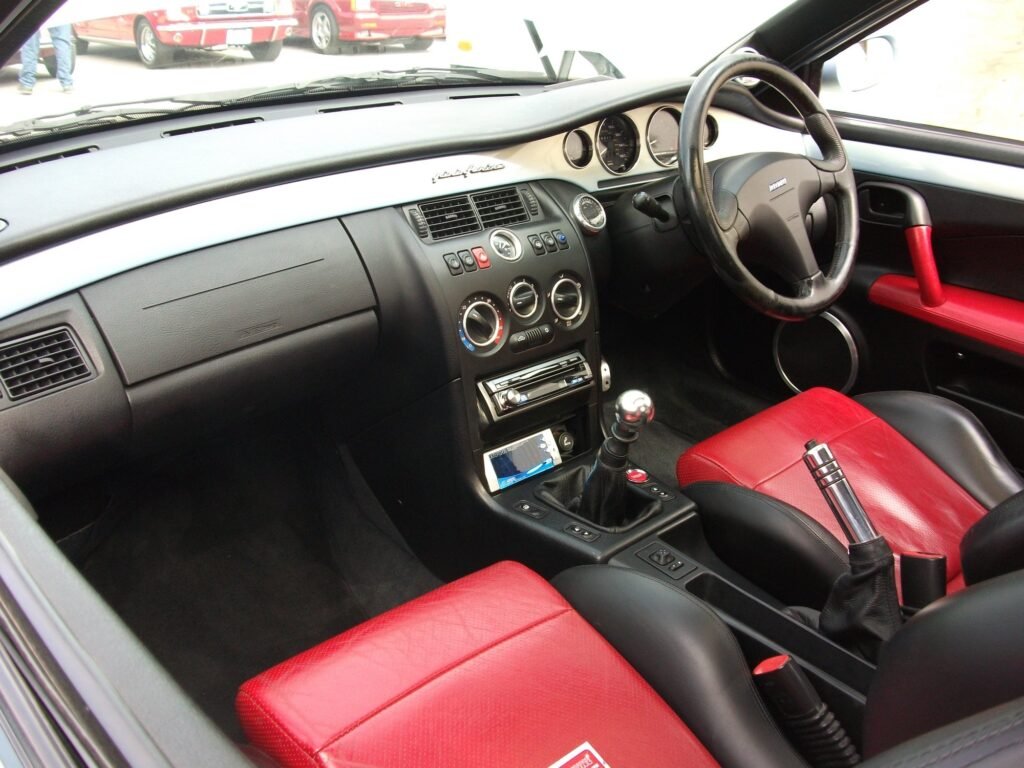
The 1998 Limited Edition is the one collectors fight over. It was the first Coupé with a six-speed gearbox, and it added red four-piston Brembo calipers, a red cam cover, a Sparco strut brace, Recaro seats with red leather, a push-button starter and a numbered plaque by the rear-view mirror. Fiat originally talked about roughly 300 cars. It then kept building them, and estimates now run from 1,400 to 1,600. Early buyers who had paid for exclusivity were furious, and resale values took years to recover. A later Turbo Plus offered almost the same kit without the numbers. The story that Michael Schumacher owned a red LE gets repeated everywhere, but we could not find a primary source for it.
Buying one now
Think twice before falling for a cheap one. Rust is the real killer: the front strut towers, the front crossmember and the rear subframe rot from the inside, and fixing them means stripping half the car. The timing belt, which keeps the crankshaft and camshafts in step, has to be changed on schedule, and on the five-cylinder it is a long, expensive job. Turbo engines that puff blue smoke after idling for a few minutes have tired valve seals. The headlights fog up. The dashboard plastic goes sticky. A cared-for 20-valve Turbo, on the other hand, will happily rack up big mileage.
Prices have been climbing for years. Naturally aspirated cars are still affordable in Europe, while clean 20-valve Turbos, and Limited Editions in particular, now ask for real money. Classic & Sports Car’s guide put show-condition LE and Plus cars at around £16,000, and that was before the market woke up.
What it says about Bangle
Look at the Coupé and then at the 2002 BMW 7 Series and you can see the same idea: draw something people will argue about, because people forget what they merely like. In Turin that philosophy produced a cult car. In Munich it produced petitions. The Fiat came first, and it explains the BMW better than any interview Bangle ever gave. It also makes a good argument against Corrado-style caution: Volkswagen’s handsome coupé was praised and forgotten, while a Fiat built on the platform of a family hatchback, the same one under the Alfa Romeo GTV, still gets people shouting at car meets.
Check you’re still alive.
Photos: Rudolf Stricker (CC BY); Franck49 (coupe406.com) (CC BY-SA 4.0); dave_7 from Lethbridge, Canada (CC BY 2.0); MrHemp (public domain); Florian Lindner (CC BY 2.5). Wikimedia Commons.