Pressure wave supercharger, Hyperbar and the strange roads of forced induction
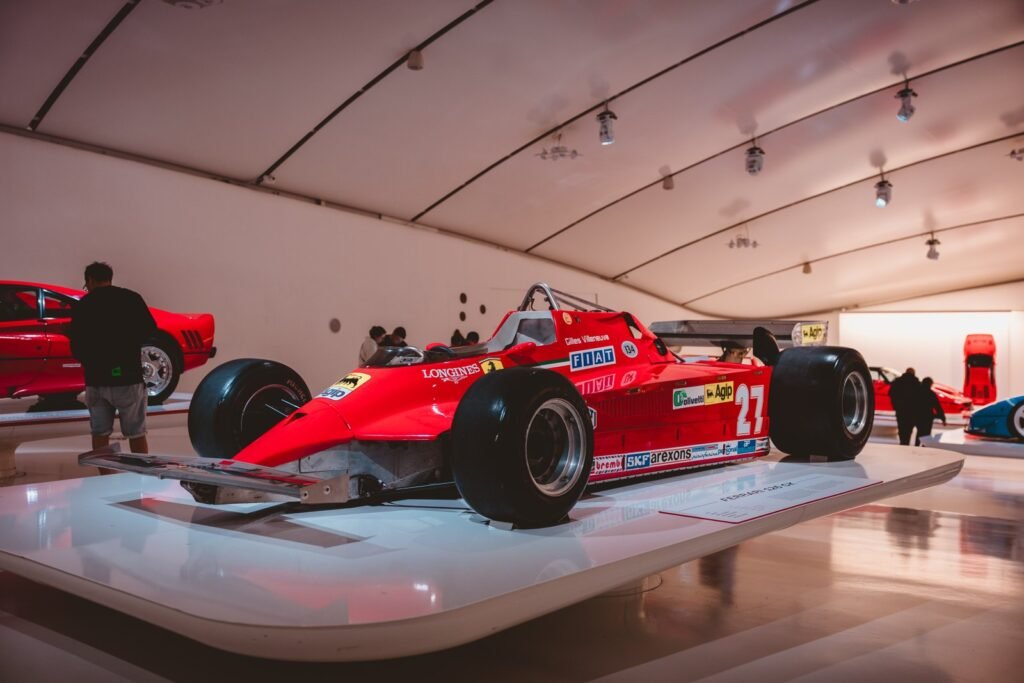
Long Beach, March 1981. Ferrari rolls into California for the first race of its turbo era with two different answers to the same question, and one of them has no turbine in it at all. The car is called the 126CX, and bolted to its V6 is a Swiss box full of tiny tubes that boosts the engine with pressure waves. In practice the belt that spins that box snaps under Gilles Villeneuve, the mechanics pull it off and fit the KKK turbos, and the 126CX never starts a Grand Prix. That’s the last time most people heard of the Comprex. It deserved better.
This series has spent six chapters on the roads that won: how an engine breathes on its own, the supercharger, the turbocharger, the war on turbo lag, twin-turbos and twincharging and the intercooler. Every one of those is on sale today at a dealership near you. This chapter is about the ditches beside that road. Three machines that look like engineering fever dreams: a supercharger that runs on sound-speed pressure waves, a turbo with its own jet-style combustor, and a blower that everybody calls a supercharger even though its real job is keeping the engine alive. Two of them came out of Europe. The third is as American as a Greyhound bus.
The Comprex: boost without a pump or a turbine
Brown Boveri, the Swiss electrical giant that later merged into ABB, owned this idea from the start. One of its engineers, Claude Seippel, patented the pressure exchanger and gave it the name Comprex in 1940, from COMPRession and EXpansion. Early engine tests went badly enough that it sat on a shelf until 1957, when the American firm ITE started testing it on vehicles and BBC came back in as a partner. So it’s a Swiss invention that an American company dragged out of the drawer.
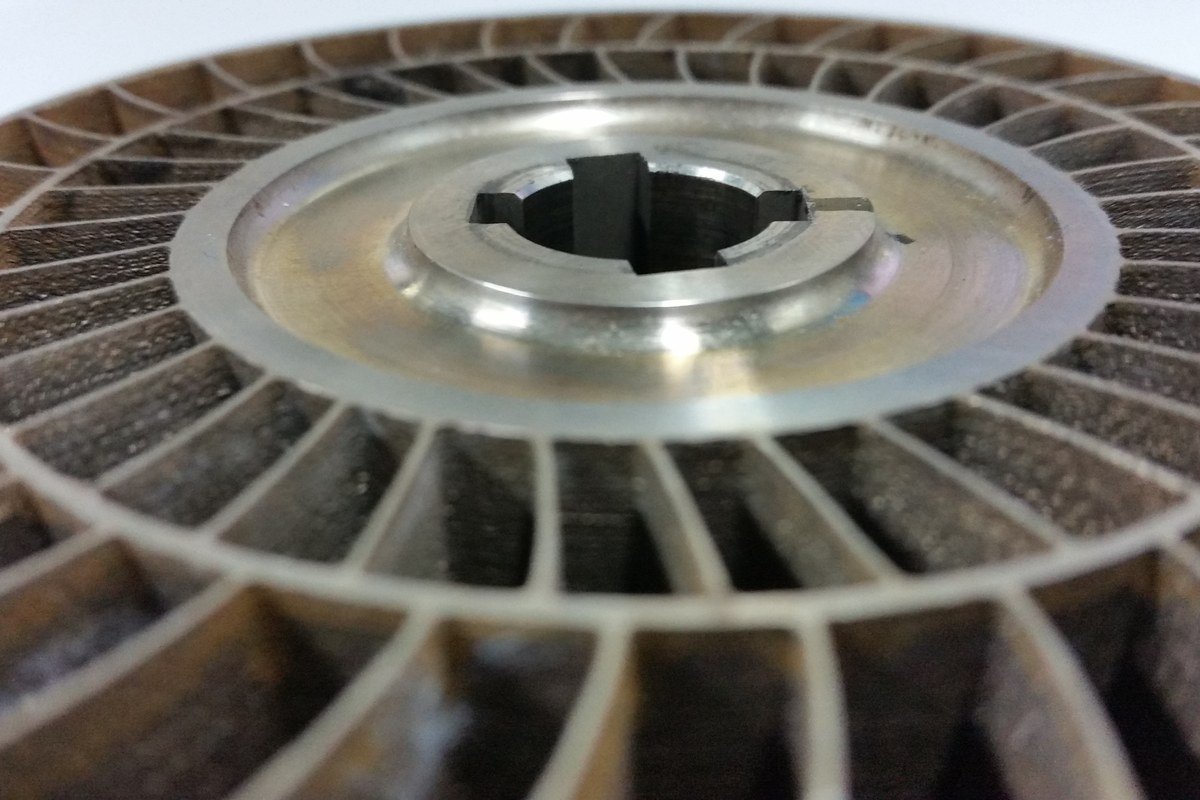
Here’s what’s inside. A drum, spun by a belt off the crankshaft, with dozens of open-ended cells running lengthwise like the holes in a honeycomb. Hot exhaust under pressure arrives at one end of the drum. Fresh air arrives at the other. When a cell lines up with the exhaust port, the gas slams in and launches a pressure wave down the cell. That wave runs through the trapped fresh air at the speed of sound and squeezes it. Then the cell rotates to the intake port and that squeezed air goes to the engine.
The part people get wrong is the mixing. The wave is not the exhaust itself. The wave races ahead; the actual boundary between burnt gas and fresh air follows far behind, crawling. The whole trick of the design is timing the ports so that the compressed air leaves the cell before that slow boundary arrives. Nothing mechanical touches the air. Exhaust hands its energy straight to the intake charge, gas to gas, in a few thousandths of a second.
The payoff is response. A turbo has to wait for a heavy turbine wheel to spin up before it makes boost. The Comprex reacts as fast as a pressure wave crosses a tube, so it’s pushing almost from idle. For a 1980s diesel, that was a revelation. Remember what passenger diesels were like in that decade: the Oldsmobile 350 diesel had already poisoned the word for a generation of American buyers, and even the good European ones, like Peugeot’s XUD, were slow off the line. A diesel with a Comprex had low-rpm shove that no turbo of the period could match.
So why did it vanish? Three reasons. First, no matter how carefully you time it, some exhaust always leaks into the fresh charge. You’re running a little accidental EGR all the time, which heats and dirties the intake. A diesel shrugs that off. A gasoline engine doesn’t, which is why the Comprex lived almost entirely in diesels. Second, the drum is belt-driven and its timing has to match engine speed across the whole rev range, which is hard to get right and harder to keep right. Third, it cost more and weighed more than a turbo just as turbos were becoming cheap, reliable and everywhere.
Who actually bought one
The first serious customer was a tractor. Finland’s Valmet put a Comprex on the 411CX engine of its 1203 model in 1980. It worked, it was expensive, and Valmet dropped it on later models. Tractors have a habit of hiding good engineering; Ferruccio Lamborghini paid for his first supercar with tractor money.
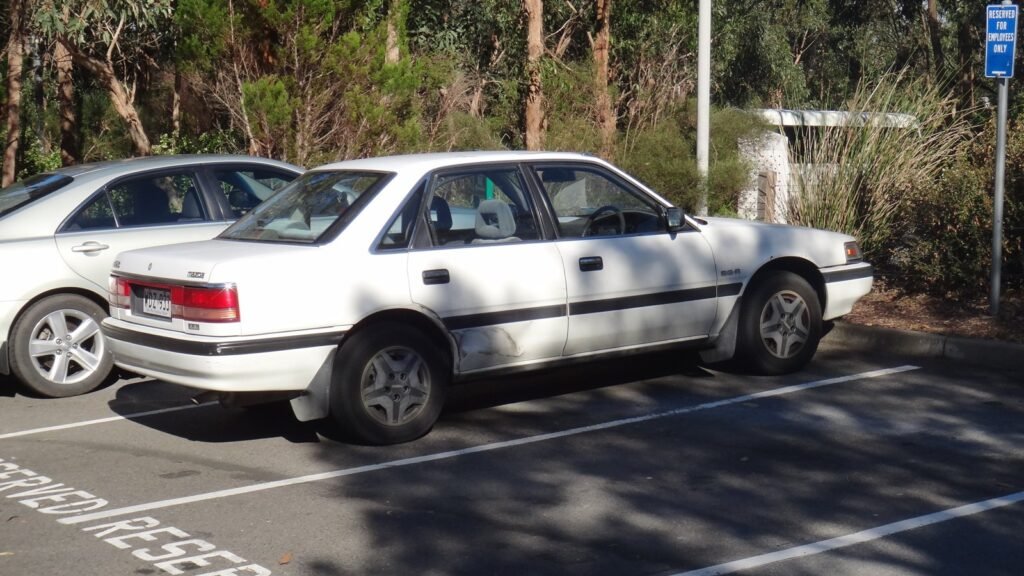
In cars, Opel offered a 2.3-liter Senator diesel with a Comprex from 1985, 95 horsepower, manual only, wearing an Irmscher plate instead of an Opel one, in tiny numbers. Peugeot and Mercedes-Benz tested it too. The car that mattered was Japanese. From 1988 the Mazda 626, sold as the Capella at home, offered its 2.0-liter RF diesel with a Comprex: 75 PS against 60 for the same engine without it. The number usually quoted is 150,000 Mazda diesels built with one, though Mazda has never published an official total. The German technical history of the device adds the kicker: European carmakers never bit, and after BBC merged with Sweden’s ASEA to form ABB there was no money left for it, so the system was sold to Mazda. A Swiss idea, revived in America, ended its life in Hiroshima.
Which brings us back to Long Beach. Ferrari and Brown Boveri had signed an exclusive deal in 1979 to develop the Comprex for racing, and the car first carried the name 126BBC before becoming the 126CX. On a bumpy street circuit full of hard braking and hard acceleration, the belt drive was exactly the weak point that would get found out, and it did. Ferrari went with the turbos and never looked back.
The idea refused to die, though. In August 1996 Greenpeace unveiled the SmILE in Lucerne, a Renault Twingo rebuilt by the Swiss firm Wenko with a 358 cc two-cylinder gas engine making 55 PS through a pressure-wave charger. It used under 3.3 liters per 100 km, call it 70 mpg, half what the stock Twingo burned. Sources disagree on whether that charger was already a Hyprex or a modified Comprex, so I’ll leave that open. The Hyprex itself came next from the same company, by then Swissauto Wenko: the drum is driven by an electric motor instead of a belt, and the name blends Hybrid and Comprex. In 2008 they put it in a VW Golf V with a one-liter engine making 150 PS and 210 Nm at 1,250 rpm. A planned Mercedes-AMG A 45 application in 2012 died because the system still had teething problems. Electrically assisted boost is now hypercar jewelry, as in the Ferrari F80. The Swiss were doing it with sound waves.
The blower that’s really a lung
Now the American one, and it’s the most misunderstood of the three. Walk past an old Detroit Diesel and you’ll see a Roots blower bolted to the side of the block. Most people assume the engine is supercharged. It isn’t, not in the way a hot rod is.
Detroit Diesel was a division of General Motors (the same GM that was playing with free-piston engines in the fifties), and its Series 71 two-stroke diesel arrived in 1938 with a gear-driven Roots blower as standard. These engines powered trucks, buses, boats, generators and military hardware for decades. Their howl earned them the nickname “Screamin’ Jimmy,” and the GM “New Look” transit buses that rattled through American cities from the sixties onward ran them by the thousand.
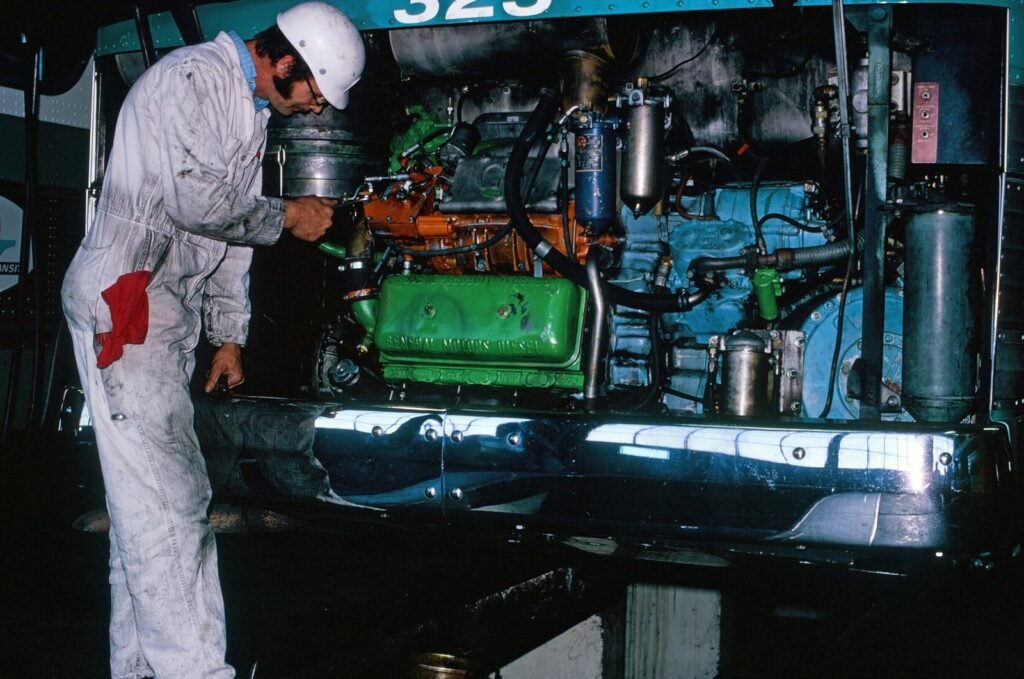
A four-stroke has a full stroke to push exhaust out and another to pull fresh air in. A two-stroke does the whole cycle in one turn of the crank, so it has no spare strokes for breathing. Small gasoline two-strokes, like a chainsaw or an old dirt bike, use the crankcase as a pump. A big Detroit two-stroke can’t. Its cylinders have intake ports in the liner and exhaust valves in the head, and the only way to sweep the burnt gas out and get fresh air in during the instant those ports are uncovered is to blow air through the cylinder. That’s the blower’s job. It’s called scavenging. Without it the engine won’t run at all.
Yes, the air arrives above atmospheric pressure, because you can’t push air through anything without a pressure difference. But that pressure serves breathing, not power. Think iron lung versus race turbo: both move pressurized air, one keeps you alive, the other makes you fast.
And here’s the American twist that makes this blower famous anyway. After World War II, surplus GMC blowers were cheap and everywhere. In 1948 Barney Navarro bolted a war-surplus GMC 3-71 to his flathead Ford and ran it on the California dry lakes, and the hot-rod world followed him. The 6-71 became the blower that sat on top of a thousand drag-strip V8s, and today’s Top Fuel superchargers still carry dimensions descended from the 14-71. So a part designed to let a bus engine breathe became the symbol of American horsepower. We told that part of the story in the supercharger chapter.
When Detroit Diesel did want real power, it added a turbo that fed straight into the Roots blower’s inlet. Those engines carried a T in the model code, TA if aftercooled. Blower to breathe, turbo to perform: twincharging out of plain necessity, decades before the word became a marketing term.
The Hyperbar: a turbo with its own afterburner
Here’s the brute-force road, and it was paved by the French military.
The problem is turbo lag at tank scale. A main battle tank weighs sixty-odd tons and needs a huge diesel with a huge turbo to move it. Huge turbos have huge inertia, which means the driver floors it and waits. On a battlefield, waiting gets crews killed.
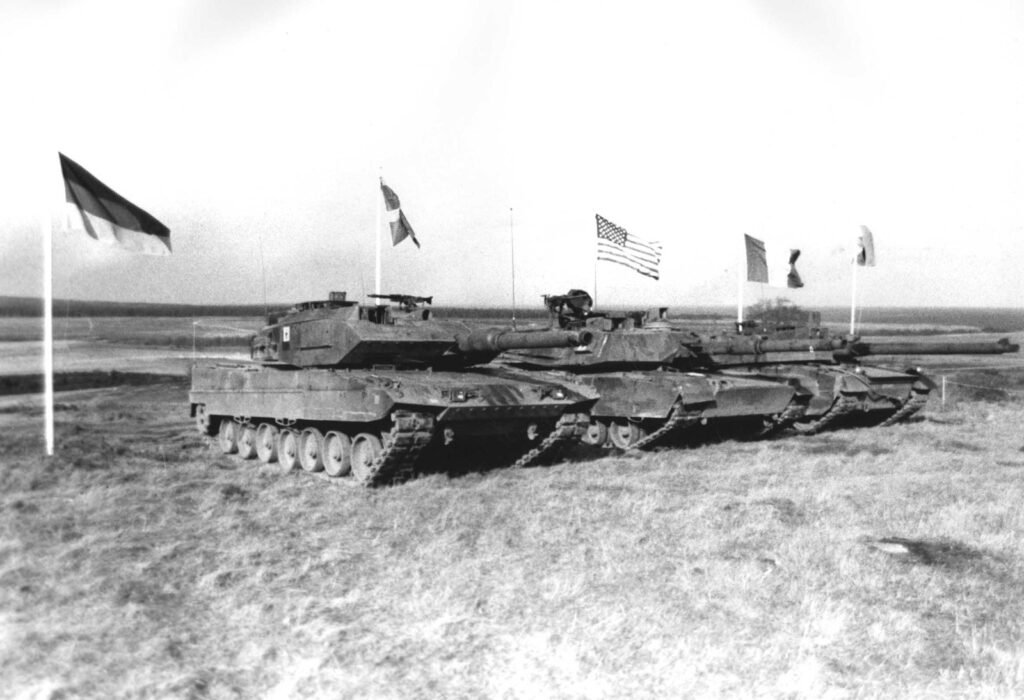
The United States answered that by skipping the diesel entirely. The M1 Abrams runs a 1,500 hp AGT1500 gas turbine, which responds fast but drinks fuel like nothing else on tracks. France went a stranger way. Engineer Jean Melchior filed patents from 1970 onward, with the French state as owner through its armament procurement office, for what became the Hyperbar: keep the diesel, but turn its turbocharger into a small gas turbine of its own.
Two pieces make it work. One is a combustion chamber sitting between the engine’s exhaust and the turbine, with its own fuel injection. The other is a bypass that sends part of the compressor’s air around the engine, straight into that chamber. With both, the compressor, combustor and turbine can run as a self-contained turbine engine (think of the Fiat Turbina, or the turbine cars Chrysler was building in the sixties), spinning on their own whether the diesel is giving them exhaust or not. A regulator meters fuel to the combustor to hold boost above a set floor. It burns hardest at startup and light load, when the diesel’s exhaust can’t drive the turbine on its own, and backs off to a trickle once the engine is working. The result is enormous boost, several bar, which is where the name comes from, available even at idle.
The bill is extra fuel, a second combustion system with its own heat and complexity, and a lot of plumbing. Nobody pays that for a passenger car. The military and the navy did. SACM, the Mulhouse engine builder that industrialized the concept, advertised a 1,400 hp Hyperbar V12 for fast patrol boats in 1983, and presented a 21-liter, 1,000 kW Hyperbar engine for 60-ton coast guard vessels the same year.
The textbook case is France’s Leclerc tank. Series production started in 1990, and the army accepted its first production tank in January 1992. Its SACM V8X-1500 makes 1,500 hp, exactly what the Abrams turbine makes, but with a Turbomeca TM 307B gas turbine built into the boost system. That turbine boosts the diesel and can also run as an auxiliary power unit with the main engine shut off. Same horsepower as the American tank, opposite philosophy: Washington replaced the diesel with a jet, Paris strapped a jet onto the diesel.
The Spanish thread
There’s a Spanish name in this story, and I’ll be careful with it. France’s AMX-10 RC armored car, which reached units around 1979 to 1981, first ran a supercharged multi-fuel V8 from Hispano-Suiza, the HS 115-2, at about 250 hp, replaced by a Baudouin diesel in the mid-eighties. Hispano-Suiza was founded in Barcelona in 1904 by Swiss engineer Marc Birkigt and Catalan businessman Damián Mateu; it’s the company whose V8 powered Rickenbacker’s SPAD. Its French arm was set up in 1923 with the Spanish parent holding 71 percent, until the French state took control in the late thirties for war production. In 1946 the Spanish company sold its car business to ENASA, the maker of Pegaso trucks, and the French side carried on alone until Snecma absorbed it in 1968. By the time the HS 115 was designed, Barcelona was in the name and nowhere else.

And to be clear about what I can’t prove: sources describe that engine as supercharged, full stop. I’ve found nothing saying it used a Hyperbar combustor, and a turbo alone doesn’t make the connection. So it stays a footnote.
Three fates, not one
Don’t lump these three together. The Comprex was the best answer to low-rpm response that nobody bought, killed by cost and fussiness right as turbos got cheap. The Hyperbar never made sense in a car, but it isn’t dead; it still rolls inside every Leclerc. And the Detroit blower never lost anything, because it was never in the race. It was doing a different job, and its fame as a power adder belongs to the hot rodders who stole it.
What the street car teaches is blunt. The plain turbo didn’t win because it was perfect; this whole series has been a catalog of the patches it needs. It won because a carmaker can build millions of them without going broke and sell them to someone who’ll drive for fifteen years without thinking about it once. A pressure-wave drum and a turbo with its own afterburner were too special for that deal. So they sit in the museum. Worth the visit, though.
What the industry did with all this air once it knew how to force it in is chapter 8: engine downsizing and why a small turbo burns less than a big one, superknock and cracked pistons included.
Check you’re still alive.