
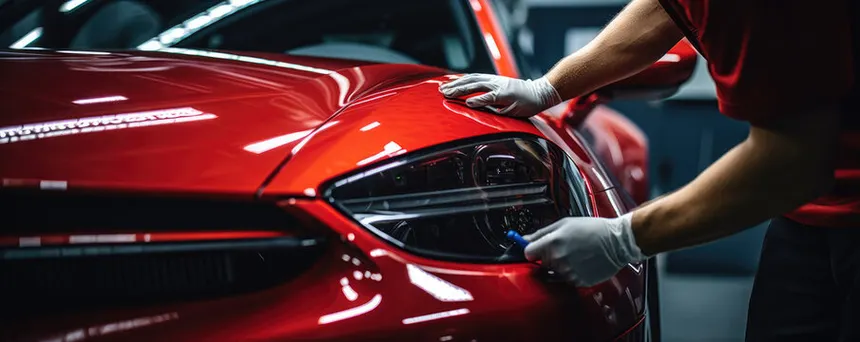
Detailing isn’t cleaning your car. It’s refusing to stop caring about it.
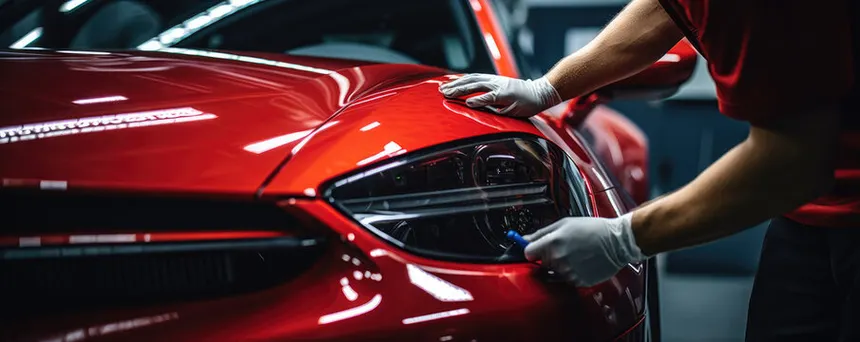
There’s a massive difference between a clean car and a cared-for car. It’s not semantics. It’s attitude. It’s the gap between wiping a damp cloth across the bonnet before handing over the keys and spending two hours with a clay bar on a car you have absolutely no intention of ever selling.
Real detailing has nothing to do with shine. It has everything to do with the relationship you have with your car.
You have a car that matters to you. That changes everything.
Not just any car. Yours. The one that hit you somewhere deep the first time you saw it. The Corrado VR6 you spent years hunting down. The RS2 that still smells like the nineties the moment you open the door. The Kimera EVO37 that strikes you as the most beautiful thing to emerge from a body shop in decades. The Mercedes Gullwing that’s beyond valuation because no valuation is really possible. The Diablo that still intimidates you parked. The Countach that looks like science fiction even though Gandini drew it in 1971.
Or the 1957 Fiat 500, which isn’t worth what the Gullwing is worth — but is worth exactly the same to whoever owns it.
That’s what changes the equation. Not market value. The value you assign it.
When a car matters to you, you start seeing it differently. A scratch isn’t a scratch — it’s a disrespect to something that didn’t deserve it. A water spot on the bonnet isn’t a water spot — it’s your own neglect, and somewhere you know it. The mud caked into the wheel arches after a wet weekend isn’t inevitable — it’s something you can fix, if you care enough to do it.
Detailing starts precisely there. The moment you decide you’re not going to let it down.

What detailing actually is
It’s not the YouTube channel with the colour-coded foam and the pumping soundtrack. It’s not the bloke with the pressure gun blasting a Ferrari in slow motion. It’s not the Instagram obsession with swirl marks under an LED torch at 2am.
That world exists, and some people in it are genuinely brilliant. But that’s the surface.
Real detailing is preservation. It’s understanding that the paint on your car is the first line of defence between steel and atmosphere, and that unprotected steel has a very predictable future. It’s knowing that the interior trim on a classic isn’t available at your local parts counter, and that if you let the leather crack through five summers of UV exposure, what you had is gone. It’s understanding that the door seals, the steering wheel leather, the dashboard — everything ages, and the rate at which it ages depends largely on you.
Mechanics have always known this, even if we never called it detailing. A car that arrives at the workshop well maintained on the outside is usually well maintained underneath too. It’s not superstition — the owner who waxes the paint also changes the oil on schedule. Neglect doesn’t respect boundaries.
The protocol isn’t the point. The point is the point.
Some people get lost in the protocol. Snow foam before or after pre-wash? Clay before iron remover or after? Exact dilution ratio for the wheel cleaner? Does graphene coating beat SiO2 on contact angle?
All of that has its place. It’s worth learning if you want to do this properly. But if you start there, you’re starting at the wrong end.
The starting point is different. It’s looking at your car and asking what it actually needs. Understanding that a 1950s classic doesn’t need the same approach as a modern sports car with water-based paint. That a garaged car has different priorities from one parked on the street year-round. That restoring oxidised paintwork on something that’s been sitting for a decade is a different challenge from maintaining the gloss on something already in good shape.
Detailing, properly understood, is diagnosis before treatment. Same as mechanics.
Even the Multipla deserves the effort
There’s an easy argument for doing nothing: “For what the car is, it’s not really worth it.” You’ve thought it. We’ve all thought it.
It’s a trap.
Because detailing doesn’t judge the car. Detailing reveals the relationship you have with it. A well-kept Fiat Multipla is still a Multipla — with that amphibian face and that impossible beltline — but it’s a Multipla that someone gives a damn about. And that shows. A neglected, filthy Multipla is a car being let down by its owner, and that shows too.
Monetary value is irrelevant. Emotional value is everything.
If you have a car you like — for whatever reason, even a reason that’s entirely yours and nobody else’s — you have every reason in the world to look after it. Because looking after it is the only way to keep enjoying it fully. And because there’s an enormous difference between looking at your car and thinking “it needs a going over” and looking at it and thinking “I love it.”
Detailing takes you from the first to the second. And keeps you there.

At NEC we talk about this straight
In this section we’re not selling products. We have no arrangements with wax brands or coating manufacturers. What we’re going to do is explain what works, why it works, and when it makes sense to use it — with the same logic a mechanic uses when explaining whether your cam belt needs changing now or can wait.
We’ll cover techniques, materials, mistakes people make and how to avoid them. Real differences between products without being dragged along by the marketing. What makes sense to do yourself and what genuinely warrants a professional.
And we’ll talk about specific cars, because the approach to a seventies Alfa Romeo with its original paint is not the same as working on a GT3 RS with matte CFRP panels that don’t tolerate a machine polisher.
This section is just getting started. It starts with the most important part: the why.
Everything else follows.
Check you’re still alive.