Lamborghini Tractors: The Kerosene Trick That Paid for the Miura
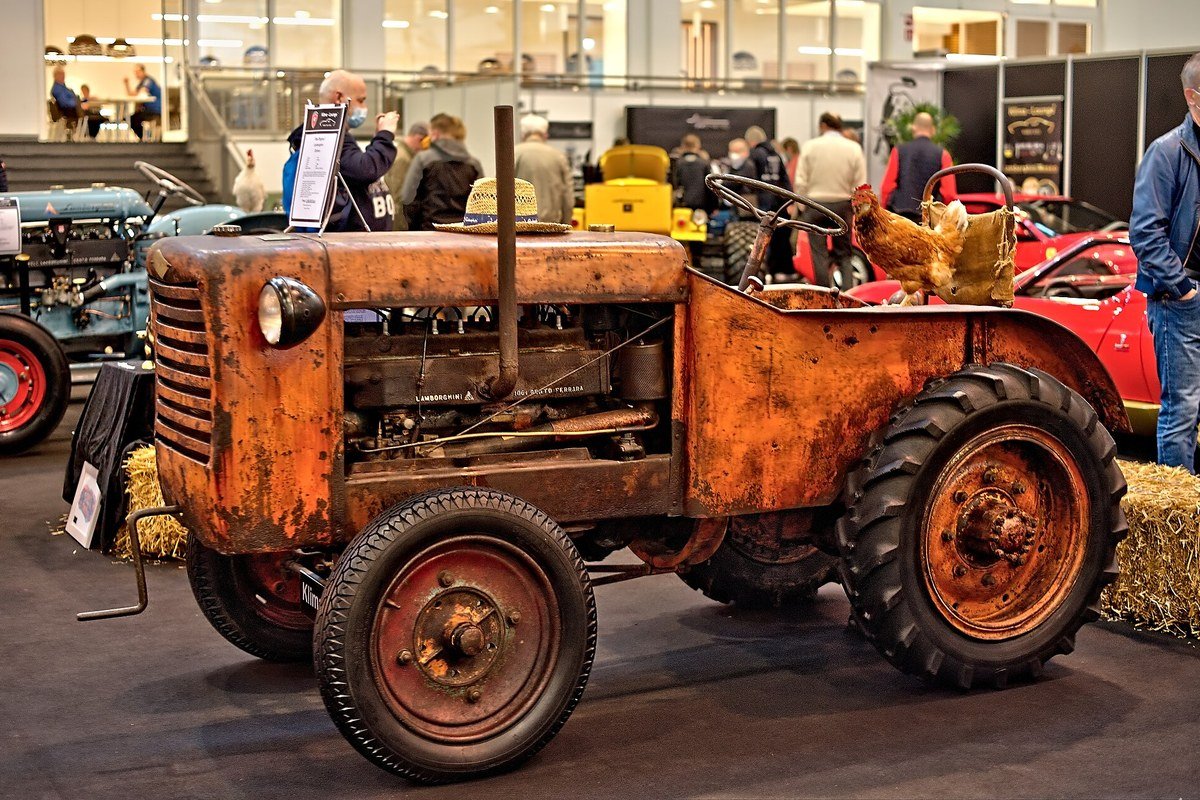
Every Lamborghini legend told in America starts in the same place: a rich tractor maker drives to Maranello to complain about his Ferrari’s clutch, Enzo tells him to stick to tractors, and the rest is posters on bedroom walls. Nobody ever stops to ask what those tractors actually were. They were the bigger business, by a mile, and the only piece of machinery Ferruccio Lamborghini ever designed with his own hands was bolted to one of them.
It was a kerosene vaporizer. And the version of that story you will find in most English-language histories gets the fuel wrong.
Lost in translation: kerosene, not diesel
The usual telling goes like this. Ferruccio bought surplus military gasoline engines after the war and rigged them so they would start on gasoline and then switch over to diesel.
Go back to the Italian and the word is petrolio. In Italian that means kerosene, not crude oil and not diesel, and the farm trade of the 1940s sold it under its own label: petrolio agricolo, agricultural kerosene. Somewhere along the line petrolio got rendered as diesel, and every rewrite since has copied the mistake.
Fabio Lamborghini, Ferruccio’s nephew and the man who runs the family museum, describes the tractor as starting on a few drops of gasoline and then running on kerosene. Diesel never enters the picture.
Why an Iowa farmer would have understood it instantly
That correction matters because the two fuels behave completely differently inside an engine.
A gasoline engine lights its mixture with a spark plug. The fuel has to reach the cylinder as vapor, and it has to survive being squeezed without going off on its own. A diesel has no spark plug at all: it compresses air until the air is hot enough to ignite the fuel the moment it is sprayed in.
Feeding diesel to a spark-ignition engine is not physically impossible, and lab rigs with elaborate atomizers have managed it. In a muddy field in 1948, with a government surplus depot for a parts counter, it was a dead end. Kerosene was a different story, and American farmers had been writing that story for three decades.
Kerosene needs two things to run in a spark engine. It has to be heated, because it evaporates far less readily than gasoline and will not make a usable mixture cold. And the compression has to come down, because kerosene knocks easily: straight kerosenes are credited with octane numbers in the single digits or just above, against the 87 you pump at a US gas station today. Kerosene is a family of blends rather than one product, so the precise number moves with the recipe and the test method.
North America ran a whole generation of tractors on distillate, a cheap fuel rated somewhere between 33 and 45 octane, and tractor production built around it only died out by 1956, when gasoline and diesel took over. The Fordson N, an American design, carried a fuel tap marked G for gasoline and K for kerosene. Britain had its own version, tractor vaporising oil, kerosene doctored with aromatics up to 55 to 70 octane and sold cheaply because paraffin was untaxed heating fuel there; British suppliers stopped selling it in 1974. Australians called the same idea power kerosene.
The hardware was the same everywhere. Rework the manifolds so the exhaust heats the intake, add a small gasoline tank for cold starts, and switch taps once the engine is warm. Ferguson sold its TE20 in a vaporising-oil version with the compression cut from 5.77:1 to 4.5:1 and the bore opened from 80 to 85 mm to win back some of the lost power.
So Ferruccio did not invent the idea. What he did was make it work on British military truck engines that were never meant for it, using whatever a state liquidation office happened to have in the warehouse, and then sell the result to farmers who could not afford gasoline.
Scrap from ARAR
The first Lamborghini tractor was called the Carioca. The family museum dates the earliest examples to 1947 and gives February 3, 1948 as the day it was shown to the public, in Cento, a farm town in the province of Ferrara.
Its engines, transmissions and differentials came from ARAR, the Italian state company set up to sell off the mountains of military hardware the war had left behind. Ferruccio bought lots and built tractors around them. The engines were British Morris units. Fabio Lamborghini lists a four-cylinder of 2,005 cc (about 122 cubic inches) making 25 horsepower and a six-cylinder of 3,600 cc, while the museum’s own history page puts the six at 3,500 cc when it describes the thousand engines bought for the L33 of 1951. Two family sources, a hundred cc apart. Take your pick.
In 1949 a Carioca cost 620,000 lire. By 1950 the plant was building about 200 a year with thirty men on the payroll.
Half the horsepower, burned for cheap fuel
The trick had a price. Italy’s Macchine Agricole puts it bluntly: a six-cylinder Morris that made 70 horsepower on gasoline fell to about 40 on kerosene. The museum lists the six-cylinder Carioca at 35.
Whichever number you trust, close to half the engine went up the stack. Farmers signed for that without blinking, because you pay for horsepower once and for fuel every single morning.
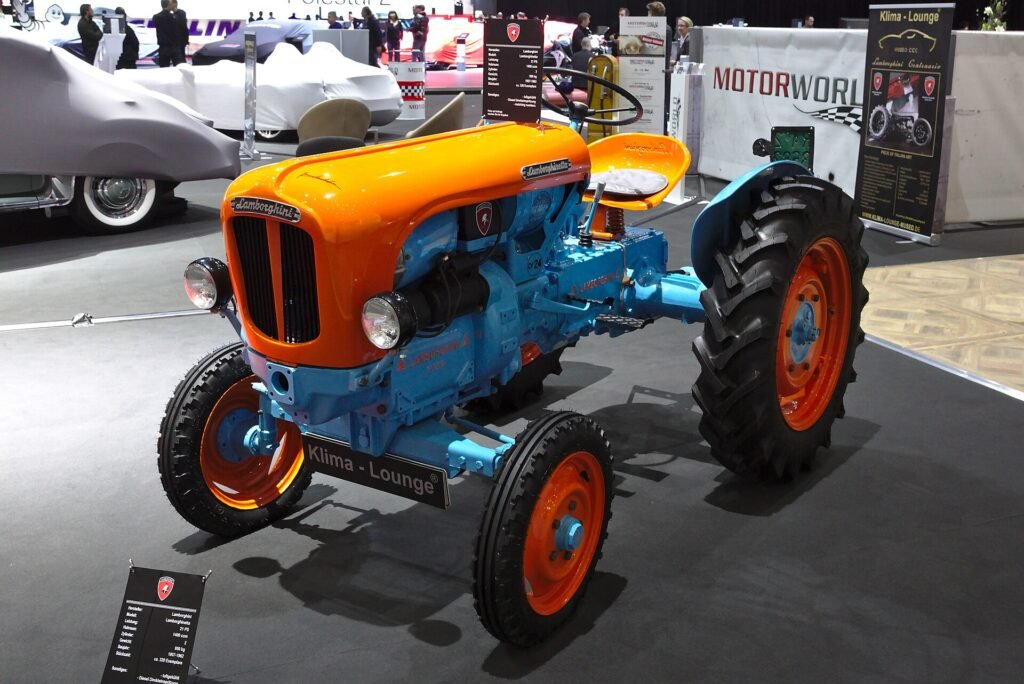
And 35 or 40 horsepower was real muscle in Italian fields at the end of the 1940s. The company’s own later lineup proves it. The DL 15 of 1952 had 15 horsepower, the DL 25 of 1953 had 25, and the Lamborghinetta, launched in 1957, made 22 horsepower from an air-cooled twin and weighed about 2,200 lb. Roughly 800 of those were built through 1962. The junkyard Carioca outpulled nearly everything the company sold through the fifties with engines of its own.
Nine tractor builders in one small town
Here is the detail that wrecks the lone-genius version. At its peak Cento had nine tractor manufacturers operating inside the same town. Italy’s farm press calls it a world record. Vancini and Martelli, who went on to found the diesel maker VM, were among them.
Ferruccio was not the only man in Cento who saw a country full of oxen and decided to sell it machines. He was the one who walked out of Cento with a name the whole world would know.
Diesel, air cooling, and the end of the trick
The scrapyard years ended when Ferruccio worked out that his real bottleneck was whatever ARAR had in stock that month.
In 1952 he switched to German MWM diesels, and after a fight he got a license to build them in Italy instead of importing them. From 1954 the engines came out of his own shop. The vaporizer and the kerosene went in the trash, because a diesel did the same work without any tricks.
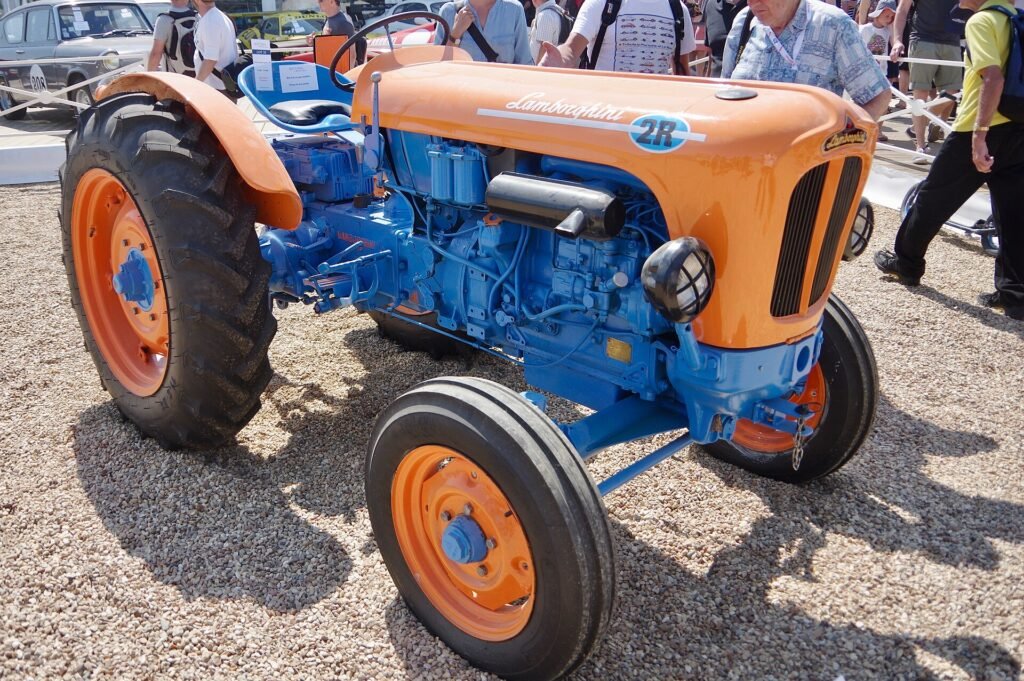
The next decision stuck for good: air cooling, starting with the Lamborghinetta. The 1R of 1961 was a single-cylinder with 26 air-cooled horsepower, the 2R made 24, and the 2R DT of 1962 added four-wheel drive. On a tractor the case is easy to make. There is no radiator to clog with dust and chaff, no water to freeze in January or boil away on a hill, no pump or hoses to quit. The fins still need cleaning, and the Italian farm press of the day praised one more thing: reliable starts in the cold.
The car company, when it came, went the opposite way on day one. Twelve cylinders, liquid-cooled.
A crawler rarer than any classic Lamborghini car
Between 1960 and 1961 Cento built the 3402 C, a tracked tractor with the DLA 40 engine: three cylinders, air-cooled, 2,193 cc (134 cubic inches), a 92 mm bore and 40 horsepower at 2,200 rpm. It weighed about 5,070 lb ready to work, stood 43.3 inches tall and ran on track shoes 10.2 inches wide.
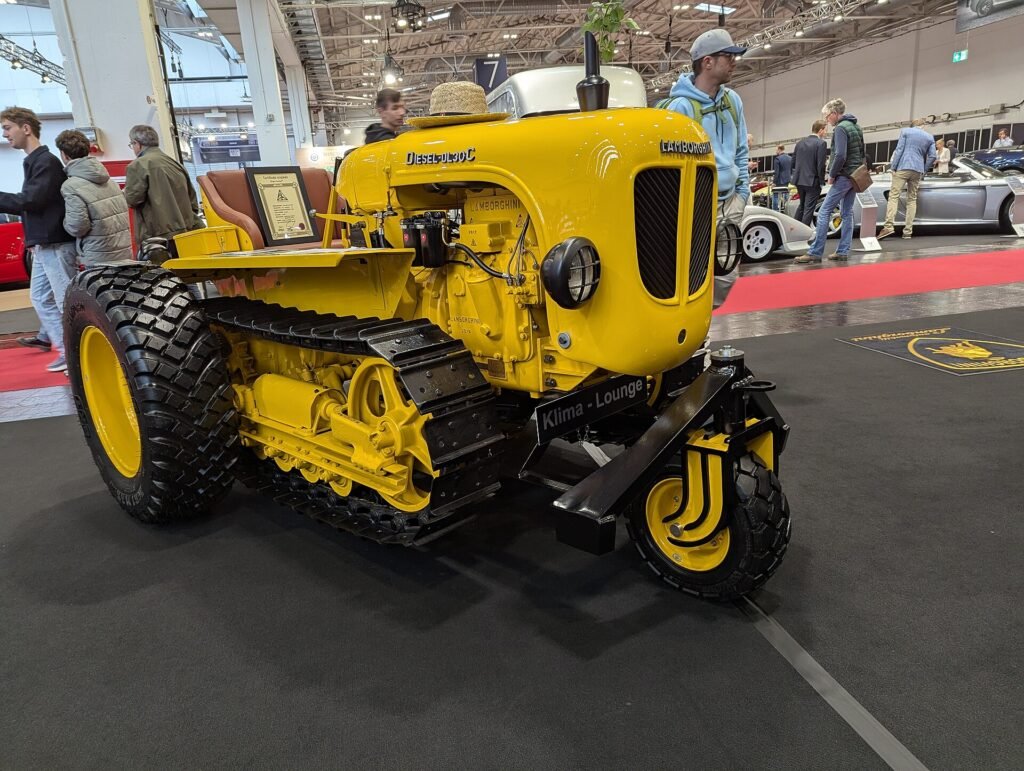
About 45 were built. Another 73 or so went out as the wide-gauge CTL, which is where the customers actually went.
Forty-five units. Among the production road cars of Lamborghini’s classic era, only one transitional version comes in lower: the two-seat 400 GT, at 23. The Silhouette stopped at 54, the Islero S at 100, and the Miura, the car everybody treats as untouchable, was built 764 times.
Today’s Lamborghini makes shorter runs on purpose. The Fenomeno revealed at Monterey Car Week in August 2025 was capped at 29 cars, all sold before anyone saw it. That car was designed from the first sketch to be scarce and priced like a house. The 3402 C was scarce because the farmers wanted the other version.
The math they leave off the website
In the early sixties the tractor plant had close to 400 employees and turned out 25 to 30 machines a day. Lambocars puts output at 5,000 a year by 1969, and SDF’s historical archive records production reaching 5,000 in 1973.
Now line up the cars, full production run for each model: 120 Lamborghini 350 GT, about 270 across the 400 GT and 400 GT 2+2, 764 Miura, 225 Islero, 327 Jarama, 791 Urraco and 54 Silhouette. The best seller of the whole first era was the Espada, with 1,217 cars over ten years.
So one year of tractors equals four complete Espada production runs. More than six Miura runs. More than forty times every 350 GT ever built.
That ratio is the real relationship between the two halves of the name, and the car company’s official history never prints it. There the tractors get two polite sentences before the story hurries off to the V12.
Bolivia, 1971
The end came from a direction no engineer could have planned for.
The Bolivian government approved a huge order, 5,000 tractors. Then a military coup in 1971 cancelled it. According to the family museum, the 5,000 tractors sat finished on the factory grounds with nobody to deliver them to. Ferruccio’s South African importer cancelled its orders around the same time.
A company that builds 5,000 machines a year with 400 people on the books cannot swallow a full year’s production overnight.
In 1972 Ferruccio sold 51% of the car company to Swiss businessman Georges-Henri Rossetti for $600,000. In 1973 he sold the tractor business to SAME. By 1974 he had let the remaining 49% of the cars go to René Leimer, a friend of Rossetti’s.
Two companies gone in thirty months. Almost two years passed between the coup in Bolivia and the deal with SAME, so this was not the overnight collapse it often gets described as. It looks a lot more like a man in his late fifties deciding he was done carrying both.
The buyer had been there first
The other half of the 1973 deal never makes the car magazines: who was buying.
SAME, based in Treviglio near Bergamo, was founded in 1942 by brothers Francesco and Eugenio Cassani as Società Accomandita Motori Endotermici. The brothers had shown a diesel farm tractor, the Cassani, back in 1927, and it won the Italian agricultural tractor competition in the early thirties. A Cassani diesel powered the motorboat Este I to the Duca di Genova cup on the Venice to Trieste run, decades before Sant’Agata V12s turned up in offshore powerboats as Lamborghini marine engines. In 1937 the Italian air force ordered three of their eight-cylinder barrel aero engines, which the war left uninstalled.
When Ferruccio was bolting together his first Carioca out of war junk, the Cassanis had had a working diesel tractor for over twenty years. The company that took over Lamborghini Trattori was no lucky rival. It was the outfit that had gotten everywhere first.
Detroit got the cars, Treviglio kept the tractors
Compare what happened to each half afterwards.
The car company went through Rossetti and Leimer, bankruptcy and court administration, the Mimran brothers, Chrysler, the Indonesian-backed Megatech and finally Audi. Six different owners between 1972 and 1998. During Chrysler’s turn, the Diablo, the car that replaced the Countach, had its final styling reworked in Detroit.
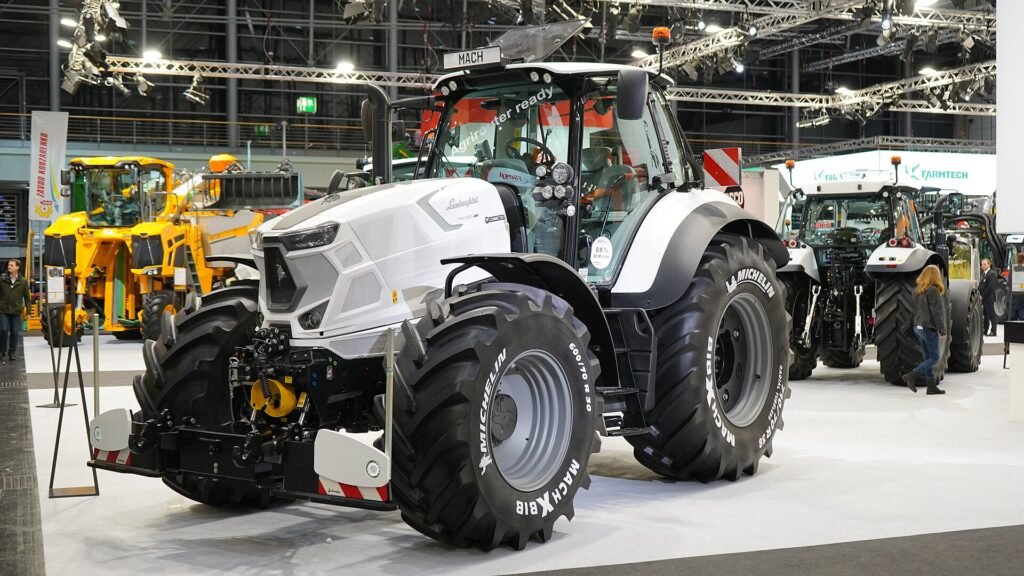
The tractor company has had one owner since 1973. Lamborghini Trattori is one of six brands in SDF, alongside SAME, Deutz-Fahr, Hürlimann, Grégoire and VitiBot. The group lists nine production sites across Italy, Germany, Croatia, India, France, Turkey and China, and reported €1,803 million in revenue with 4,462 employees in 2022.
The tractors still carry the bull. The current European lineup starts with the 50 to 60 horsepower Sprint, runs through the Crono, Spire and Strike and tops out with the Spark R at 115 to 135. For years the flagship was the Mach VRT, launched in 210, 230 and 250 horsepower versions. There is even a crawler left, the 115 horsepower Strike C, whose family tree goes back to the DL 25 C that took the company onto tracks in the mid-fifties.
Seventy-eight years after the Carioca, a dealer will still sell you a brand-new 50 horsepower Lamborghini. In Spain, where Same Ibérica was getting models like the 874-90 DT and 774-80 DT homologated by the Spanish agriculture ministry in 1987, that tractor shared the farm with the home-grown Ebro tractors built in Barcelona.
Bulls for the cars, codes for the tractors
Look at what each half of the house calls its products.
From 1966 the cars took Spanish fighting-bull names: Miura, Islero, Espada, Jarama, Urraco, Jalpa. Breeders, bulls and words from the bullring, chosen one by one by a man who knew the Spanish ranches.
The tractors got codes. DL 15, DL 25, 1R, 2R, 3402 C, R 226, R 340. The only exceptions were the Lamborghinetta, which is just a diminutive, and the original Carioca.
Today the tractors wear English marketing names: Spire, Spark, Strike, Crono, Mach. The half that works for a living ended up named in the language of trade shows.
The cars never left the bullring. The Revuelto of 2023 and the Fenomeno both carry bull names, and the Fenomeno’s comes from a bull fought in Morelia, Mexico, in 2002 and pardoned in the ring for its courage. Sixty years after the Miura, the cars still draw from that dictionary and the tractors have dropped it completely.
Where the first Carioca lives
The tractor that started everything is in the Museo Ferruccio Lamborghini at Funo di Argelato, outside Bologna, inside a former Lamborghini factory.
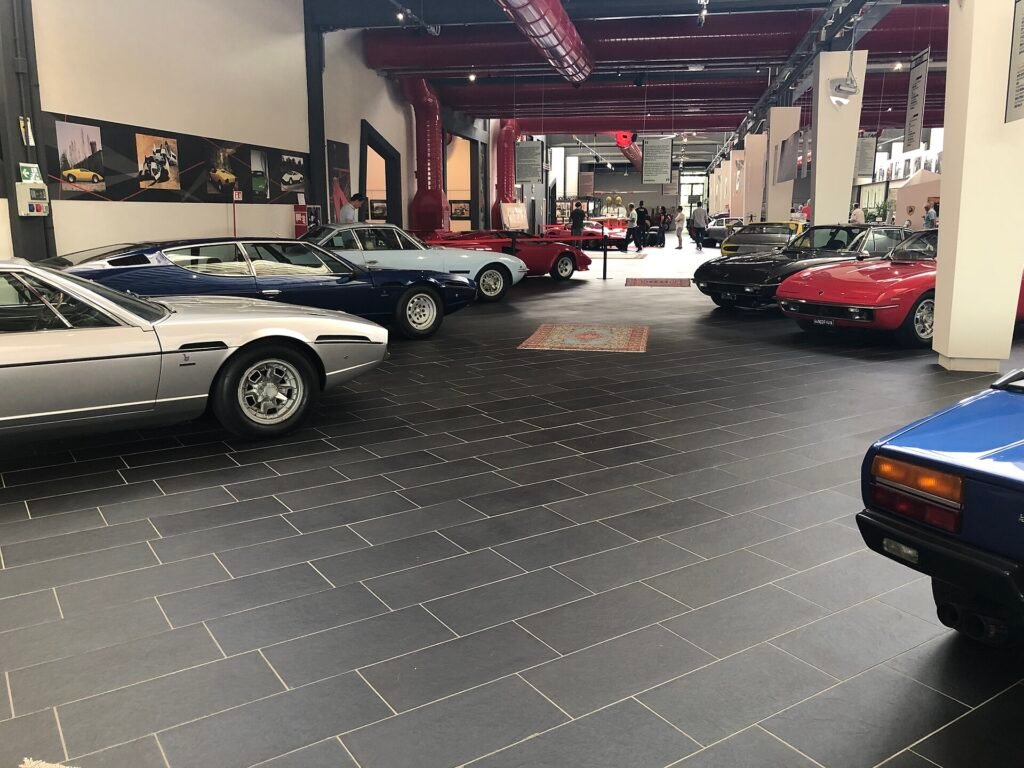
The family opened the museum in May 1995 at Dosso di Sant’Agostino, in the province of Ferrara, at Tonino Lamborghini’s wish. On May 27, 2014 it moved to its present home and grew from about 12,900 to 53,800 square feet. The Carioca shares the floor with Ferruccio’s own Miura SV, a Countach, a Jarama, an Urraco, an Espada and the Fiat-based barchetta he raced in the 1948 Mille Miglia.
It is the one place on earth where both halves of the name are parked under the same roof.
The part Sant’Agata would rather skip
The car company treats the tractors as a cute prologue. “He started out building tractors,” and then on to the good stuff. Never a number, never a model, never a word on how they worked.
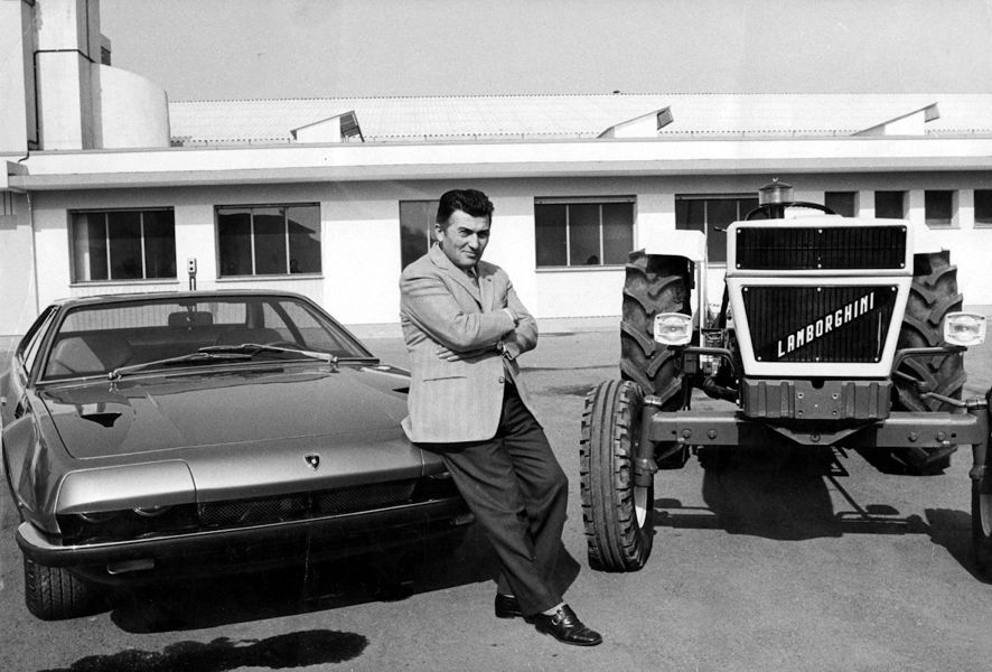
The numbers explain why. The tractor plant was the big operation in the family. In a single year it shipped four times the entire production of the car company’s best-selling model. It built its own licensed engines from 1954, nine years before the car factory existed. And it is the only one of the two that never changed hands after Ferruccio left.
I don’t have both companies’ books, so I won’t tell you which one made more money. What the numbers we do have say is that the tractor side moved volume on another scale entirely and kept one owner for half a century, while the car side went through six owners in twenty-six years.
Then there is the harder point. Almost nothing credited to Ferruccio Lamborghini as an engineer came out of his own head. Giotto Bizzarrini designed the V12, and Gian Paolo Dallara and Paolo Stanzani made it usable. The Miura was pushed through by three young men on their own time, with test driver Bob Wallace as the third. Touring, Bertone and Marcello Gandini drew the bodies. Ferruccio hired brilliantly and decided fast, and that is a real talent. But the one component he designed with his own hands, to fix a problem nobody had fixed for him, was a kerosene vaporizer on a scrapped British truck engine.
Everything else wearing the bull was paid for by that.
Check you’re still alive.
Photos: Thomas Vogt (CC BY 2.0), Alexander Migl (CC BY-SA 4.0), David Merrett (CC BY 2.0), MarcelX42 (CC BY-SA 4.0), TKOIII (CC BY-SA 4.0), unknown author (public domain).