Nissan GT-R50 by Italdesign: The Million-Dollar Godzilla Nobody Bought
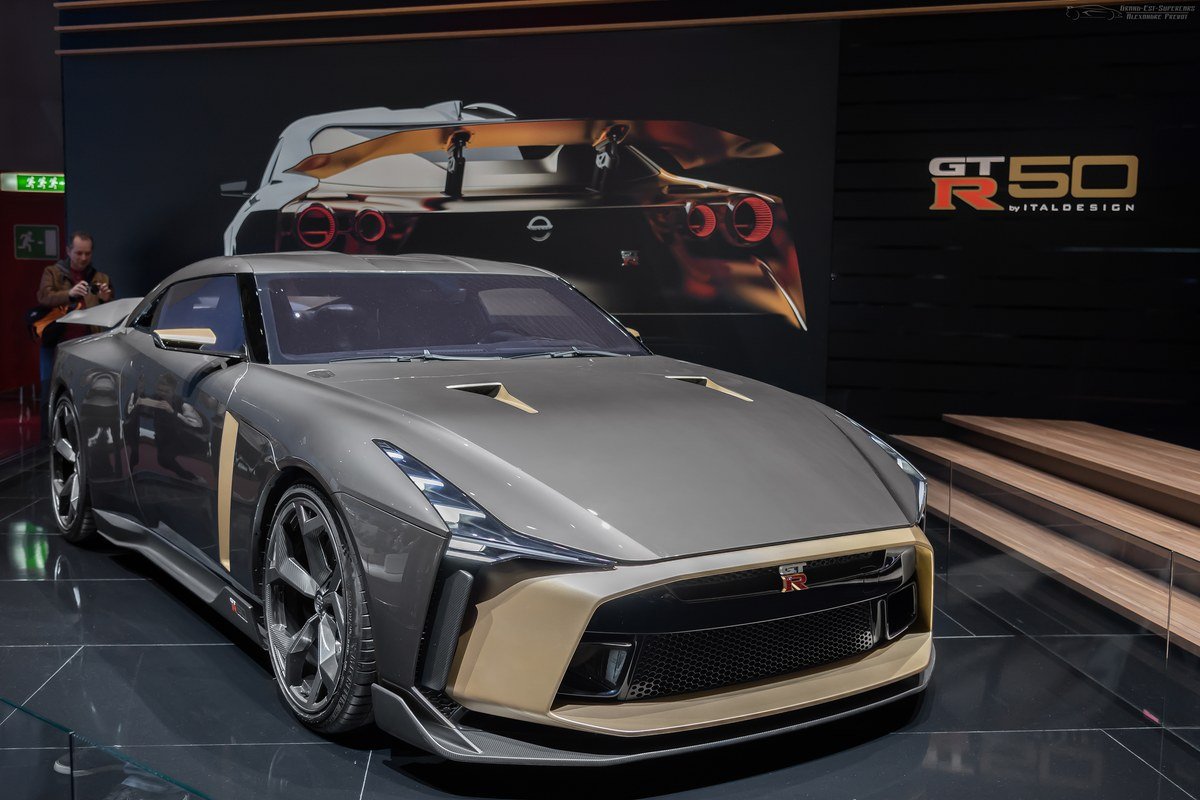
The Nissan GT-R50 by Italdesign is the rare seven-figure supercar that went to auction with delivery miles on the clock and couldn’t find a buyer. RM Sotheby’s rolled car number 11 across the block in Munich in November 2023, silver with NISMO red trim and 119 miles, never delivered to a customer, estimated at €950,000 to €1,150,000. Nobody bid high enough. Nissan had promised 50 of these to mark two 50th birthdays. It built 18 or 19, depending on whose count you trust, and the ones that surface for sale keep going home unsold. That’s a strange fate for a car that wears the most loved badge in Japanese performance, and the explanation starts with the fact that most of the people who loved that badge never got to buy it.
The forbidden fruit
For two decades, the GT-R was the car American kids drove on a PlayStation and nowhere else. Nissan never sold the R32, R33 or R34 Skyline GT-R through its US dealers. A handful came in through registered importers, and that door slammed in public. NHTSA found that one of them, Motorex, had filed false statements of conformity for 17 Skylines, and revoked its registration on February 15, 2006. The agency also moved to rescind import eligibility for some Skyline models. After that, the legal route was to wait for a car to turn 25 and slip under the federal exemption, which is why R32s only started arriving in numbers around 2014.
The nickname got to America before the car did. In July 1989, Australia’s Wheels magazine put the new R32 on its cover and called it Godzilla, after the Japanese movie monster. It stuck to every GT-R since.
Then came the R35. It went on sale in the US as a 2009 model, the first GT-R a regular American could buy new at a Nissan store, and the platform underneath the GT-R50. It brought a 3.8-liter twin-turbo V6, all-wheel drive, a rear-mounted dual-clutch box and a sticker that embarrassed Porsche 911 Turbo owners. Nissan quoted 0-60 mph in 3.5 seconds. Edmunds clocked 3.3 with launch control and 4.0 without it.
Launch control and a $20,000 lesson
Launch control is what turned the R35 into a cautionary tale. The system manages engine revs and clutch engagement so the car leaves the line with as much traction as four tires can find. In 2008, an owner posted on a GT-R forum that his dealer wanted $20,000 to replace a transmission that broke after a launch with the stability control switched off. Nissan refused warranty coverage and started asking buyers to sign a form saying that driving with VDC off could void it.
A class action followed. According to AutoGuide, the settlement reached in September 2009 gave 2009 owners a transmission software update, a promise that warranty claims wouldn’t be denied for anyone who’d driven with VDC off before Nissan’s notice, and a $75 service coupon. Nissan admitted nothing. The lead plaintiff got $31,500, $25,000 of it for the gearbox. The GT-R’s transmission has carried a reputation ever since, and the GT-R50 uses a strengthened version of that same unit. There’s no public reliability data for the anniversary car. It inherits the reputation and nothing else we can measure.
Fifty years, two ways
The anniversary math is tidy. Italdesign was founded in Turin on February 13, 1968, by Giorgetto Giugiaro and engineer Aldo Mantovani. You know its work even if you don’t know its name: the original Volkswagen Golf, sold here as the Rabbit, the Scirocco, the DeLorean DMC-12 that Doc Brown turned into a time machine. It also drew a surprising number of Japanese cars, including the Isuzu Impulse, the Subaru SVX and the Toyota Aristo, which Americans bought as the first Lexus GS.
The GT-R side of the math is a little looser. The Skyline 2000 GT-R was shown at the Tokyo Motor Show in 1968 and went on sale in February 1969. Its roots are odder than most people realize. The Skyline came from Prince, a company that started out after the war as Tama, founded by former aircraft engineers from Tachikawa who built the Tama E4S-47, an electric car, because 1947 Japan had spare electricity and almost no gasoline. Tama became Prince in 1952, and Prince merged into Nissan in 1966. Godzilla’s grandfather ran on batteries.
So Italdesign hit 50 in 2018, the GT-R in 2019, and the car arrived in between. Car Design News reports that Italdesign pitched it to Nissan’s global design chief, Alfonso Albaisa, at the 2017 Geneva show. Albaisa’s line at the launch was that you don’t often get to ask what a GT-R without limits would look like and then go build it.
The original was a sedan with a race engine
The car the GT-R50 honors was a four-door. The 1969 PGC10 Skyline 2000 GT-R looked like something an accountant would drive, and under the hood sat the S20, a 2.0-liter inline six with twin cams and four valves per cylinder, reworked from the engine of the Prince R380 prototype that won the 1966 Japanese Grand Prix. It made 160 PS at 7,000 rpm in a car weighing 1,120 kg, about 2,470 pounds. For scale, a 1969 Datsun 510, the boxy sedan that later won over American club racers, had a 1.6-liter four with a single cam.
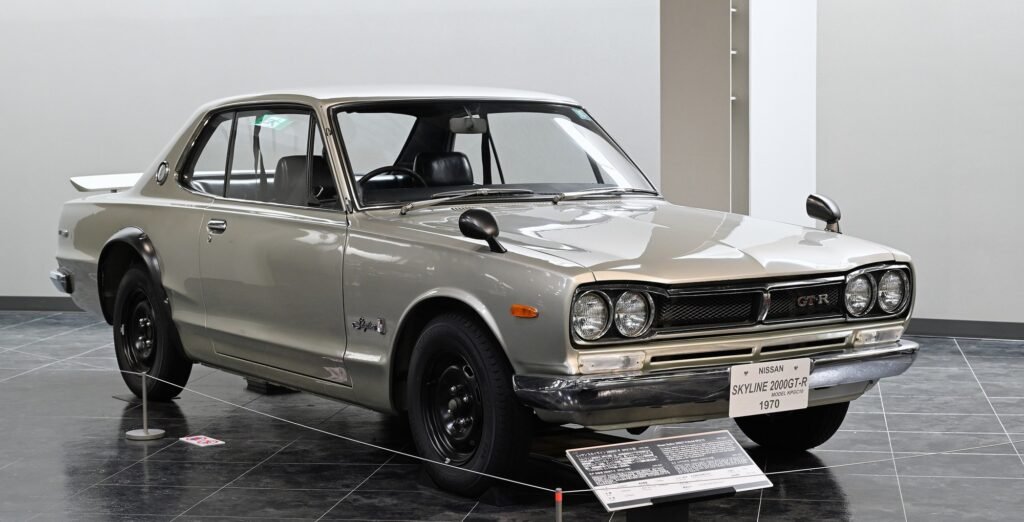
The number 50 was already part of the legend. By Nissan’s count, the GT-R reached 50 race wins in March 1972 and had 52 when the factory team pulled out that October. The Japanese call these cars Hakosuka, roughly “box Skyline.”
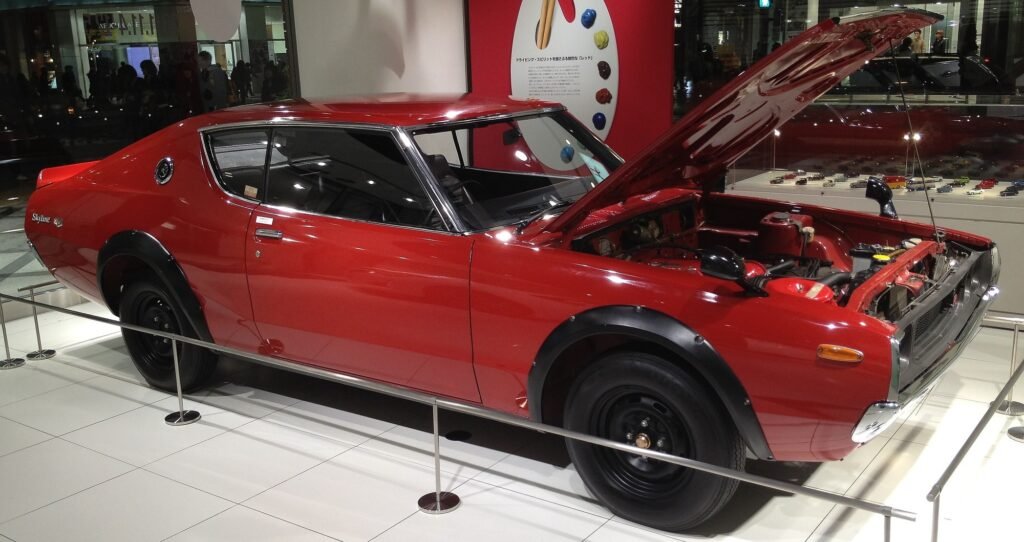
Its successor tells the GT-R50’s story in advance. The 1973 KPGC110, nicknamed Kenmeri after a TV ad campaign with a young couple called Ken and Mary, arrived just as Japan tightened emissions rules. Nissan built 197 between January and April 1973, months before the October oil embargo, and then shelved the GT-R name until the R32 of 1989. One anniversary special that stopped far short of its plan had a precedent half a century old.
Penned in San Diego
The name invites a wrong guess. “By Italdesign” sounds like a Giugiaro-house design, and it isn’t. Nissan’s own release says exterior and interior design came from Nissan Design Europe in London and Nissan Design America in San Diego. Evo adds that the California studio did the exterior while London handled the technical design for the prototype. Italdesign developed it, engineered it and built it by hand near Turin. That’s the opposite of the house’s usual deal, where Italdesign holds the pen, as it did on the BMW Nazca C2.
The shape has a video game in its family tree. Car Design News points out that the nose echoes the Nissan Concept 2020 Vision Gran Turismo, designed by Michael Rienth at Nissan Design Europe and shown full size at Goodwood in 2014. Gran Turismo is the same game that turned cars like the Suzuki Escudo Pikes Peak into bedroom-wall posters. The GT-R50’s taillights are smaller versions of that concept’s. A car that grew up in the game that made Americans want GT-Rs in the first place came back as one they could buy, for about a million dollars.
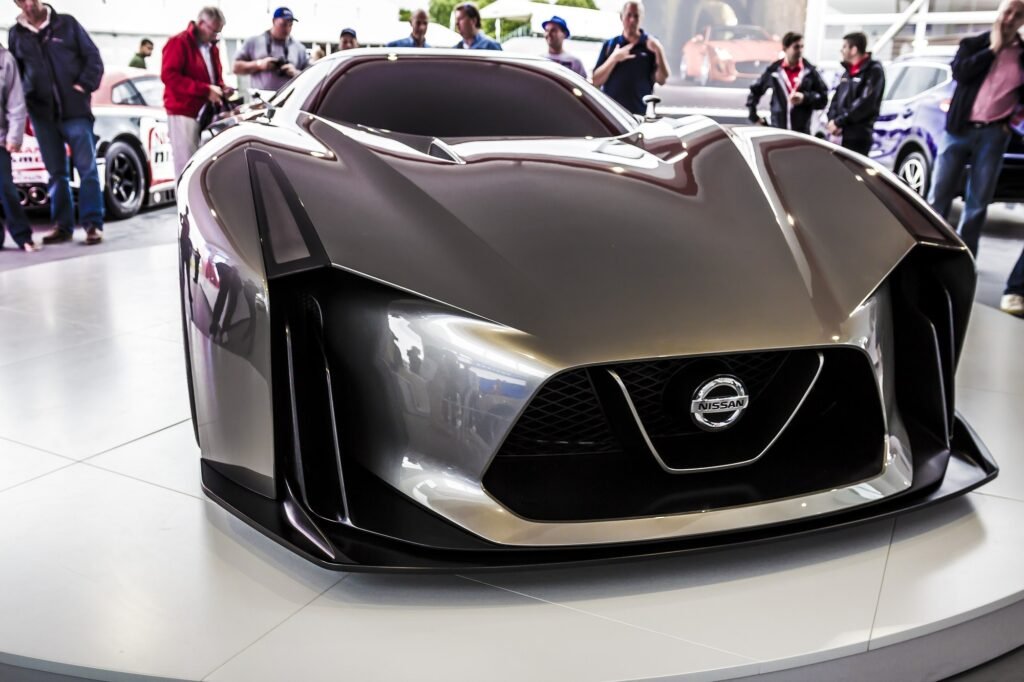
Against the GT-R NISMO it’s built on, per Nissan’s spec sheet:
- The roof sits 54 mm (2.1 in) lower, at 1,316 mm (51.8 in), with a dropped center section.
- It’s 97 mm (3.8 in) wider at 1,992 mm (78.4 in) and 94 mm (3.7 in) longer at 4,784 mm (188.3 in).
- The 2,780 mm (109.4 in) wheelbase is unchanged. This is an R35 underneath.
A gold strip runs nearly the full width of the nose, the hood bulge grows, and the headlights shrink to thin LED slots. The “samurai blade” vents behind the front wheels now run from the rocker to the shoulder line. Out back, the four round GT-R lamps become hollow rings that seem to float, under an adjustable wing on two uprights. Customers could order that wing with hydraulics.
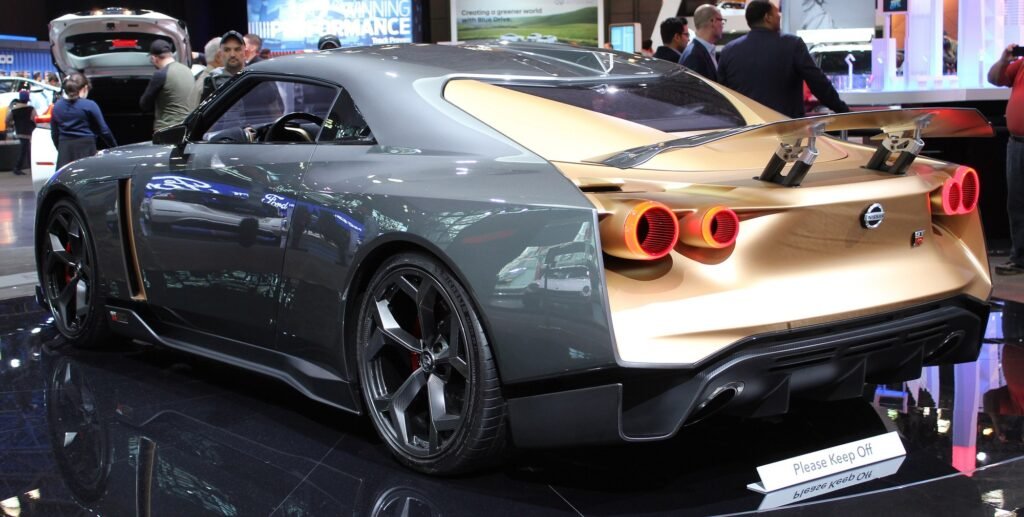
What NISMO did to the V6
The VR38DETT has powered the R35 since 2007, and Nissan assembled each one by hand in a clean room at its Yokohama plant. The builders are called takumi, master craftsmen. Nissan said there were four of them in 2013 and five in 2017, and every engine carries a plaque with the builder’s name. For the GT-R50, NISMO, the Nissan performance arm that took the R390 GT1 to a Le Mans podium in 1998, reworked it with parts and lessons from GT3 racing.
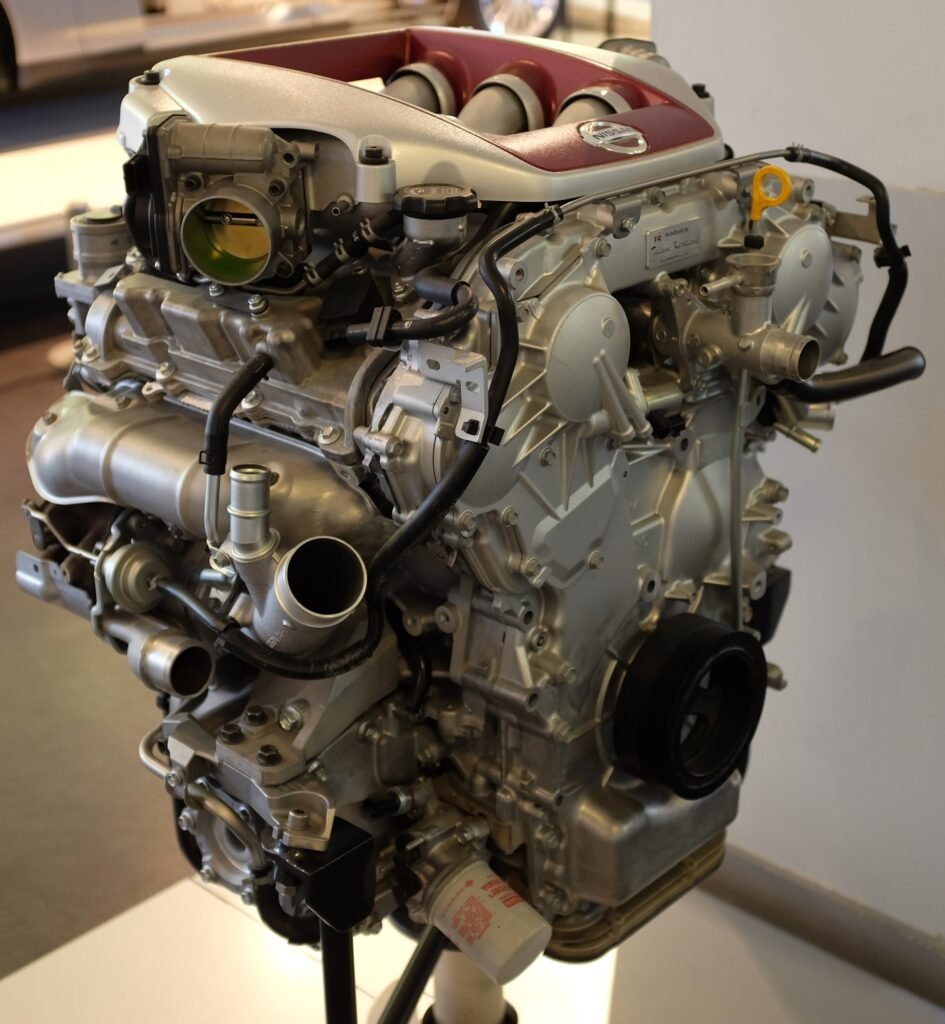
Per Nissan:
- GT3-spec turbochargers, bigger in diameter and higher in flow, with larger intercoolers.
- Heavy-duty crankshaft, pistons, connecting rods and bearings, higher-flow injectors and revised cam profiles.
- 720 PS (710 hp) at 7,100 rpm and 780 Nm (575 lb-ft) from 3,600 to 5,600 rpm, against 600 PS and 652 Nm (481 lb-ft) for the NISMO.
Here’s why bigger turbos and bigger intercoolers travel together. A turbocharger uses exhaust gas to spin a turbine, and that turbine drives a compressor that crams extra air into the cylinders. More air lets the engine burn more fuel and make more power. A larger turbo can move more air at high rpm, though depending on its design it can feel lazier down low. Squeezing air heats it, and hot air is thin. The intercooler is a radiator for the intake charge, and at the same boost pressure, cooler air is denser and carries more oxygen into every cylinder.
Autoblog reported that about 12 percent of the engine’s parts are new. Some 110 extra horsepower from swapping roughly one part in eight tells you how much the stock VR38 had in reserve, something the American tuning shops that push these engines past 1,000 hp figured out long ago.
The six-speed dual-clutch transmission sits at the rear axle in a transaxle layout. Engine up front, gearbox out back, weight spread more evenly between the axles. One clutch handles the odd gears, the other the even ones, so the next gear is already waiting when you shift. The all-wheel-drive system, ATTESA E-TS, first appeared on the 1989 R32, and here it gets stronger differentials and halfshafts. Bilstein DampTronic dampers adjust their stiffness continuously. Brembo brakes clamp two-piece drilled rotors, 390 mm (15.4 in) front and 380 mm (15 in) rear, with six- and four-piston monoblock calipers. The wheels are 21 inches, wrapped in Michelin Pilot Super Sports.
A million dollars, give or take
After its debut at the Goodwood Festival of Speed in July 2018, the prototype toured Spa-Francorchamps, the Monterey Motorsports Reunion, Nissan Crossing in Tokyo’s Ginza district and the UAE. In December 2018, Nissan and Italdesign opened orders for up to 50 cars at €990,000 before taxes and options, which Autoblog put at $1,126,799. Buyers could pick their own paint and trim and tie their car to a GT-R model year.
Now look at what else was on the table in 2018:
- 2017 Nissan GT-R NISMO: 600 PS for €184,950 in Germany including tax, the same car underneath for less than a fifth of the price, before you even add tax to the GT-R50.
- 2018 McLaren Senna: 800 PS, 1,198 kg (2,641 lb) by McLaren’s dry figure, £750,000, all 500 sold before the public saw it.
- 2018 Ferrari Monza SP1 and SP2: about €1.6 million, 499 cars, sold out.
Nissan never published a weight for the GT-R50, so any power-to-weight comparison with the Senna is guesswork. Japanese dealer Provide Cars cited internal testing showing the GT-R50 0.8 seconds quicker than the NISMO from 0 to 200 km/h (124 mph). That’s a factory figure with no independent test behind it.
The plan that slipped, then stalled
Deliveries were first promised for 2019, then slid to late 2020. The production car was supposed to debut at Geneva in 2020, and COVID canceled the show; Italdesign showed it online that May. The first five cars finally left the plant in Moncalieri, just outside Turin, in November 2021. One wore a new color, Verde Kenmeri, inspired by the GT-R show car from the 1972 Tokyo Motor Show. An anniversary special painted after the GT-R that died young. It’s hard to write a better omen.
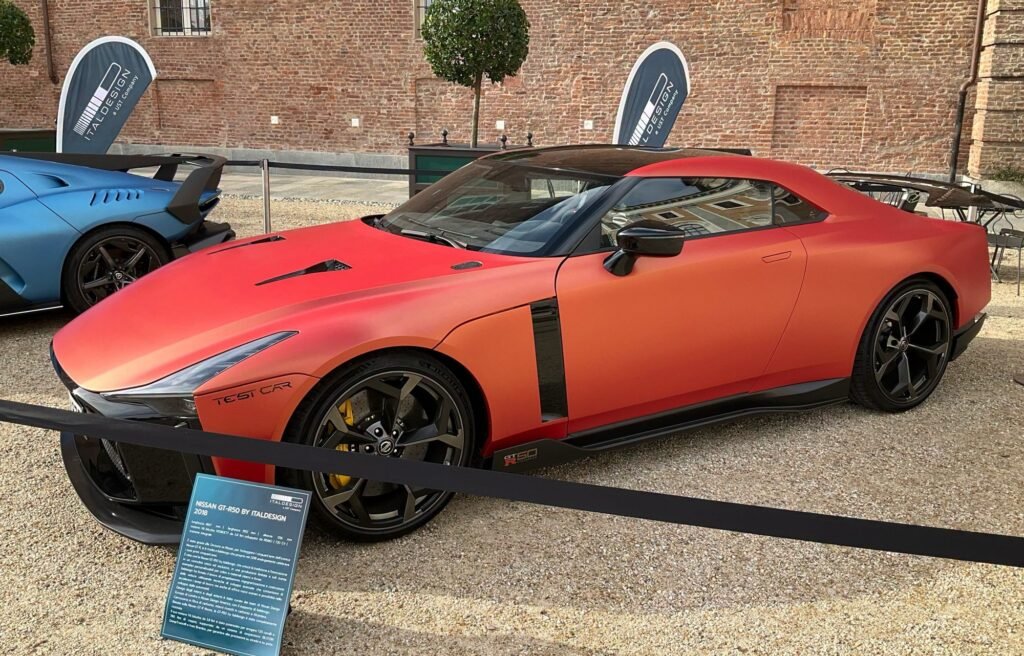
In late 2019, Nissan was still saying demand was strong while slots stayed open. On July 1, 2022, it announced the order book was closed and gave no number. The counts come from outsiders: RM Sotheby’s catalog and Carscoops in 2023 say 18 production cars, while Drive, Japan’s BH Auction and Carscoops in 2026 say 19. Neither Nissan nor Italdesign has confirmed either, or explained why the run stopped where it did.
Back to Munich. Car 11’s options took its list price to €1,050,000. The catalog said it had never reached an end customer and had entered the EU on a temporary import bond, and Drive reports it had been offered in Canada in October 2022. After the no-sale it was listed at €975,000, an asking price, not a sale. At the same auction, a 2023 BMW 3.0 CSL, another 50-car anniversary special, this one for BMW M, sold for €1,017,500. Same number on the label, opposite result.
Japan hasn’t been kinder. BH Auction offered one GT-R50 in January 2025 with 213 km and a ¥240-290 million range. In November 2025 it offered car number 17, blue, with 219 km, at ¥155-165 million. In June 2026 a blue, right-hand-drive, unregistered GT-R50 with 221 km went up at ¥145-155 million. The mileage nearly matches car 17, so it’s very likely the same car back with a lower estimate, though the listing doesn’t say so. No final price has been published for any of the three.
The car that lost its Nissan VIN
The November 2025 listing has the detail that sums up the whole project: car 17’s original Nissan chassis number was removed and replaced with a new one carrying an Italdesign prefix. Whether every car got the same treatment, and which maker appears on the homologation papers, isn’t public.
Both parents have moved on since. The last R35 left Nissan’s Tochigi plant on August 26, 2025, a Midnight Purple T-Spec for a Japanese buyer, after about 48,000 cars in 18 years. Italdesign, majority-owned by Lamborghini inside the Volkswagen Group since 2010, agreed on December 10, 2025, to sell a majority stake to UST, a California tech company, and the deal closed in September 2026, with Lamborghini keeping a significant share. The Turin coachbuilder behind this car is now, in a sense, American-owned.
The Spanish footnote
There’s a Spanish chapter here that rarely makes it into English coverage. Italdesign styled the first SEAT Ibiza of 1984, the car SEAT developed on its own after Fiat walked away. And Nissan had a real factory in Spain. In the early 1980s it bought into Motor Ibérica, the company behind Ebro trucks, took control, and renamed it Nissan Motor Ibérica. Barcelona’s Zona Franca plant built Patrols, Terranos and Navaras for decades.
Put the dates side by side. In November 2021, the first GT-R50s left Moncalieri for their owners. On December 16, 2021, the Zona Franca built its last vehicle, a Navara, and Nissan shut its Barcelona plants. Different budgets, different departments, but the picture from that winter is a hand-built million-dollar special leaving Italy in the same quarter Nissan walked out of Spain.
Why it didn’t land
Neither company has explained, so this is our read. COVID cost the production car its Geneva launch and pushed deliveries three years past the prototype. The price put a Nissan against a Senna or a Monza, and buyers at that level want something the base brand can’t sell anyone else. Here, under the Italian body, was a platform Nissan sold for under €200,000. The name didn’t help either: a million-dollar car named after the coachbuilder, drawn in California and London, running a Japanese drivetrain. Drive called it a rare misstep in the supercar world.
Godzilla wasn’t built for collectors
The GT-R50 is a beautiful car and a serious piece of engineering, and it misreads what made the badge matter. The GT-R earned its name by humiliating more expensive cars, the way the Honda NSX once showed Ferrari what a Japanese engineer could do. The first one did it with a 2.0-liter six in a family sedan. The R35 did it with supercar times at a Nissan dealer price. American fans waited decades for the right to buy one legally. The GT-R50 flipped the formula and charged Ferrari money for a GT-R in a Turin suit. For anyone with a million to spend in 2018, the Senna and Monza had bigger names. For the kid who learned what a GT-R was in Gran Turismo, a million dollars is another planet. Nissan had a 710-horsepower, hand-built GT-R and ended up with a collector’s piece that keeps coming home from auction.
Check you’re still alive.
Photos: Alexandre Prevot (CC BY-SA 2.0), TTTNIS (CC0), MIKI Yoshihito (CC BY 2.0), big-ashb (CC BY 2.0), Kevauto (CC BY-SA 4.0), RocketJohn (CC BY-SA 4.0), Turning67 (CC BY-SA 4.0).