
Chrysler Atlantic Concept: Two Neon Engines, a Bugatti’s Name and a Line Giugiaro Drew First
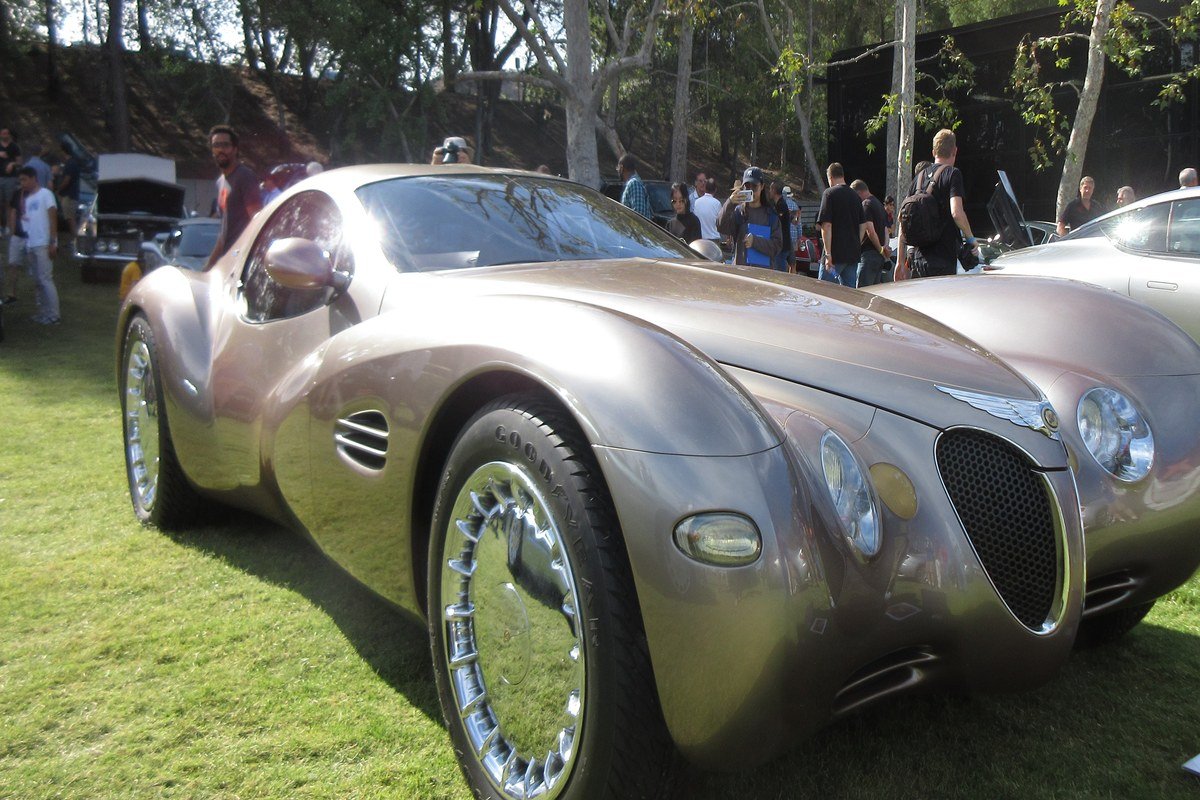
In January 1994 Chrysler introduced a compact to America by having it say “Hi.” The Neon started at $8,975, ran a 2.0-liter four and was aimed at people buying their first new car. About a year later the same company bolted two of those engines together, wrapped them in hand-built steel on 22-inch wheels, parked the result in Detroit and named it after the most valuable French coupe on earth.
That was the 1995 Chrysler Atlantic concept. It is one of the prettiest things Chrysler ever built, and it mixed an economy-car engine, Viper running gear and the silhouette of a 1930s masterpiece.
The part Detroit left out is what was going on at Bugatti at the time. The company that owned that name was alive, in Italy, running out of money, and its designer had already put the same line on a car of its own.
A napkin, a plane and a date that won’t behave
Every American car legend needs a napkin, and this one has it. The version repeated for years on Allpar runs like this: Bob Lutz, Chrysler’s president, and Tom Gale, its design chief, were judges at Pebble Beach in 1994. They saw plenty of concepts on the lawn and decided Chrysler would show up the next year with something that sent the rest back to their trailers. Lutz sketched it on a napkin. Gale kept the sketch from his designers so it wouldn’t box them in and pointed them at French coupes from the thirties instead: Delahaye, Talbot-Lago, Delage, Bugatti.
It’s a great story with a bad calendar. Wallace Wyss, the automotive writer, confirms he saw both men judging at Pebble that year and then points out that the car was already under way in 1993. Designer Tom Tremont, speaking on a 1995 episode of Top Gear as reported by Motor1, put the idea in 1993 too, with Lutz and Gale on their way home from the Frankfurt show and a concours in Paris, and the napkin drawn on the plane. So the napkin may survive. Pebble Beach as the moment of inspiration does not.
The Pebble connection is still worth a footnote, because of who had won there. In 1990 the Best of Show trophy went to a 1938 Type 57SC Atlantic owned by Ralph Lauren. Nobody on that lawn needed the name explained.
Bob Hubbach got credit for the final shape, with Jack Crain leading the team. Gaffoglio Family Metalcrafters in California built the body. The references were never hidden: the Bugatti, the 1937 Talbot-Lago T150 SS and a 1947 Delahaye bodied by Saoutchik. The wheels measured 21 inches up front and 22 in back, absurd for 1995, with discs that nod to the Type 41 Royale.
What Chrysler hid under all that steel
Here is where the car stops being a tribute and turns into a very American hot-rod project. The original Bugatti had a straight-eight, so the tribute needed one. A straight-eight is what it sounds like, eight cylinders in a single file, and it’s the reason those prewar hoods go on forever. Nobody in Detroit had built one for decades.
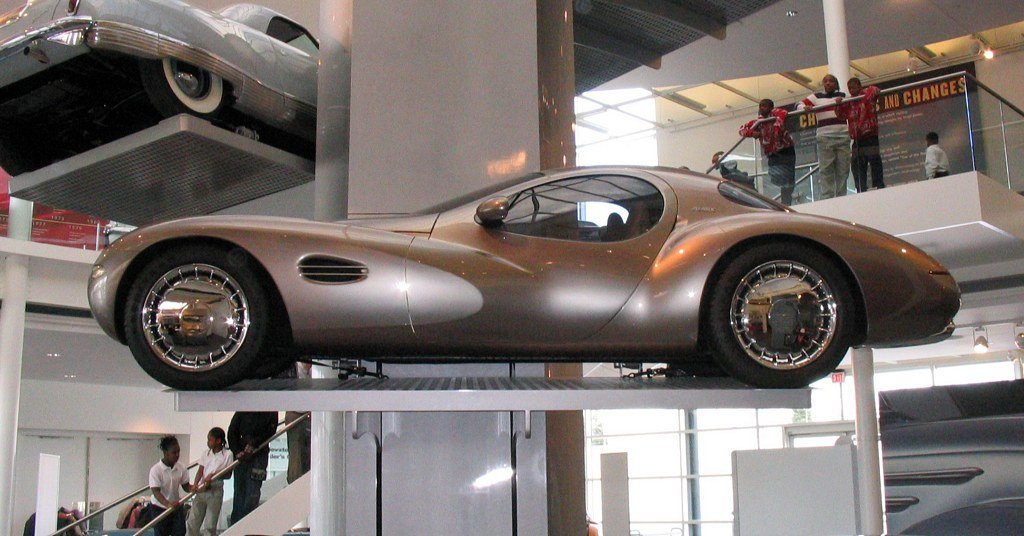
Chrysler had a 16-valve, 2.0-liter four sitting in Neons by the thousand. Two of those laid end to end gave 4.0 liters, about 244 cubic inches, and eight cylinders in a row. Motor1 and Below the Radar both report 360 hp. For scale, the Dodge Viper RT/10 from the same company that year made 400 hp from a V10 of exactly twice the displacement, and the Neon that donated the parts made 132 hp on its own.
The rest came off the shelf in the same spirit. Suspension and steering came from the Viper, under a tubular chassis on a 128-inch wheelbase. The gearbox was a four-speed automatic transaxle, the 42LE out of the front-drive LHS sedan, turned around and placed at the back, with a torque tube running through the center tunnel to reach it. A transaxle just means the gearbox and differential share one housing at the driven axle. In this car it also meant ratios picked for a family sedan trying to turn 22-inch wheels, which is why the Atlantic gathered speed about as eagerly as a parade float.
Engineers did check whether the Viper’s 8.0-liter V10 would fit in that long nose. It fit. They left the Neon engines in anyway, because the whole joke depended on it.
The British guy who heard it start
Chrysler let a handful of journalists drive it slowly on closed roads, and Autocar ran its test on April 19, 1995. John McCormick liked what he saw right up to the moment somebody turned the key. His growing appreciation, he wrote, was shattered. The exhaust barked. Engineer Jonathan Rundels admitted it had been tuned to sound good idling on a show stand, and McCormick noted the body flexed and the tires squealed against the arches. He also said it was remarkable the thing could do 50 mph without falling apart, which from a British road tester counts as affection.
Could it have been built? Jalopnik says public interest nearly pushed Chrysler to do it. Motor1 says it was never seriously on the table. Below the Radar quotes Crain saying the design could have been productionized, the way the Viper went from show stand to showroom. On Top Gear, host Chris Berry guessed about $100,000, close to twice the price of a Viper. The steel body fed the rumors, since most show cars of the period were fiberglass and foam. Gale himself reportedly ended the talk by arguing that the two-door market was gone. The Prowler got the green light instead, a call that says plenty about the Chrysler of those years.
Why the real one has rivets
The car Chrysler was quoting began as a workshop problem. In 1935 Ettore Bugatti’s son Jean showed a prototype called the Aérolithe, skinned in Elektron, an aircraft alloy of 90 percent magnesium and 10 percent aluminum. It’s light, it’s strong, and it burns. Bugatti’s own account says it was also miserable to work and impossible to weld. If you can’t weld two panels, you rivet them, so the sheets were joined on the outside and the seam stood up in a fin from nose to tail, right over the roof.
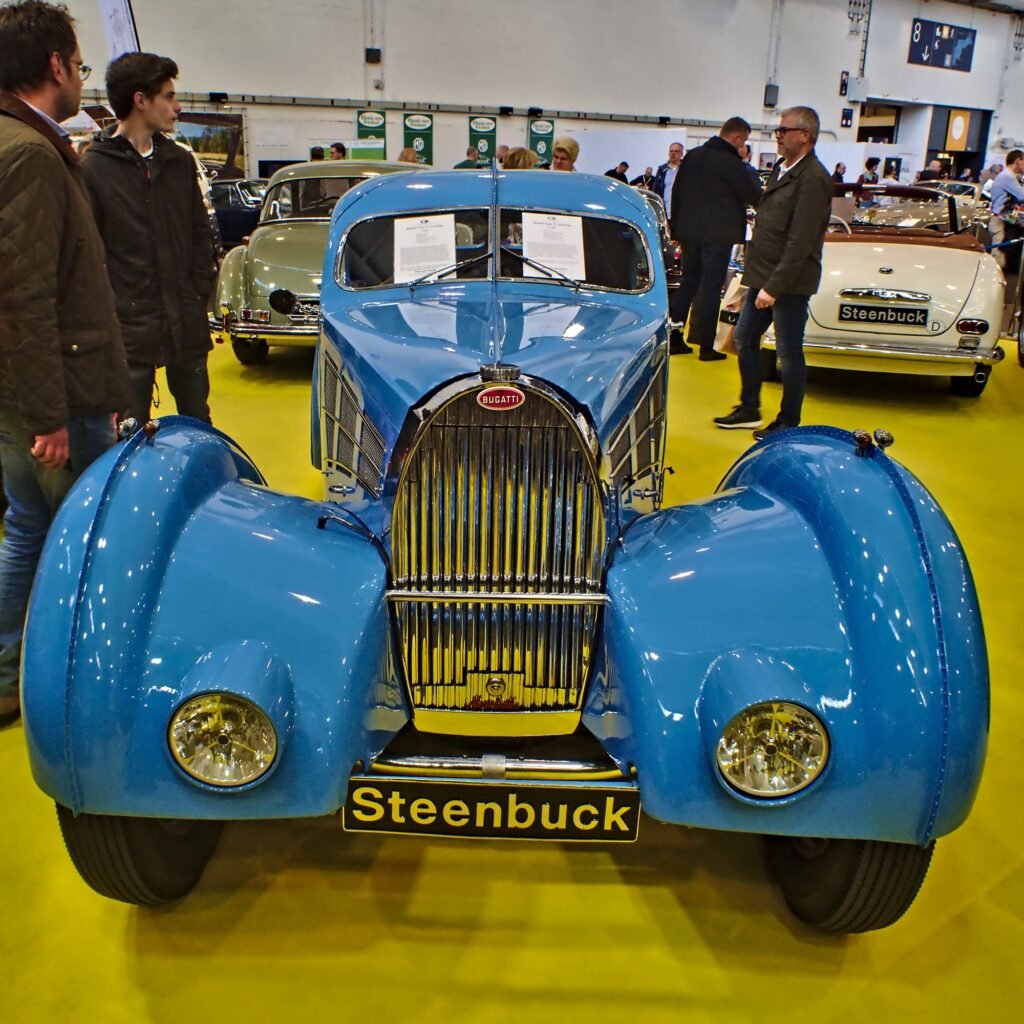
When production started in 1936, Bugatti switched to aluminum, which could have been joined any way they wanted. They kept the rivets anyway, because by then the fix had become the look. Four Atlantics were built through 1938, three survive and the fourth has never been found. Everyone has told that part, so we’ll leave it. Under the hood sat a 3,257 cc straight-eight, roughly 199 cubic inches, which means the Chrysler engine was bigger and had a much worse excuse. Achim Anscheidt, Bugatti’s design boss until he retired in 2023, called that seam “a signature design feature to this day.” He stayed on as an adviser to Mate Rimac, whose company now runs the brand.
Meanwhile, near Modena
Chrysler, as Below the Radar notes, had no link to Bugatti at all. The name belonged to Romano Artioli, an Italian who ran one of the biggest Ferrari dealerships in the world, became Italy’s first Suzuki importer and bought the Bugatti trademark in 1987. He built a blue factory in Campogalliano with money and optimism in about equal parts, and launched the EB110 on September 15, 1991, what would have been Ettore Bugatti‘s 110th birthday. Autocar priced the Versailles dinner that month at £160,000 for 1,600 guests. Other accounts say 1,800. The EB110 GT had a 3.5-liter quad-turbo V12, all-wheel drive, 553 hp and a claimed 212 mph.
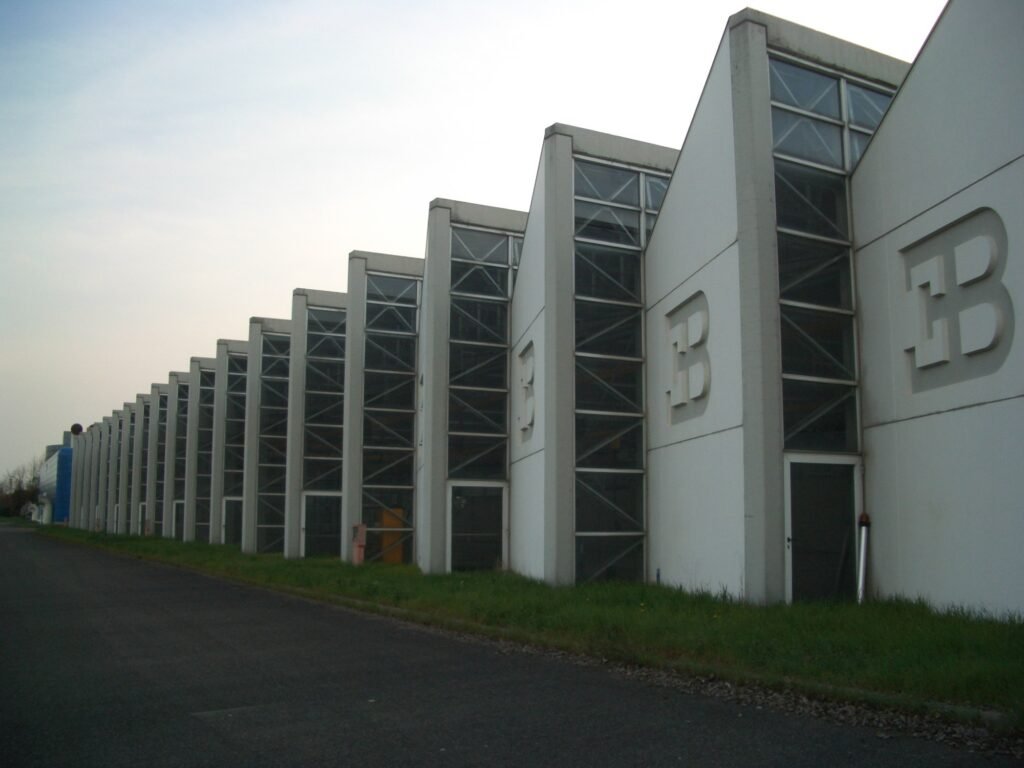
In August 1993 Artioli also bought Lotus from General Motors. The little Elise that came out of that era is named after his granddaughter, Elisa. Hold that thought next time someone calls the Elise a purely British story.
The bankruptcy landed on September 23, 1995, five months after Autocar’s test of the Chrysler. The New York Times reported that November that a court had declared Bugatti Automobili insolvent over $125 million in unpaid debts. Lotus went to Proton the following year to help cover the hole. So that year’s Detroit crowd applauded a Chrysler wearing a Bugatti name while the actual Bugatti still had its doors open. By the end of 1995 the plant was silent and the bankruptcy trustee, Gian Luigi Rossini, held the only key.
Giugiaro was already there
This is the part most Atlantic stories skip. Giorgetto Giugiaro of Italdesign had been drawing for Bugatti since the ID 90 show car at Turin in 1990. At Geneva in 1993 Artioli’s Bugatti showed the EB112, a four-door on a carbon tub with a 6.0-liter V12, 460 hp and a claimed 186 mph. It drove onto its stand under its own power. Money ran out before it could go anywhere.
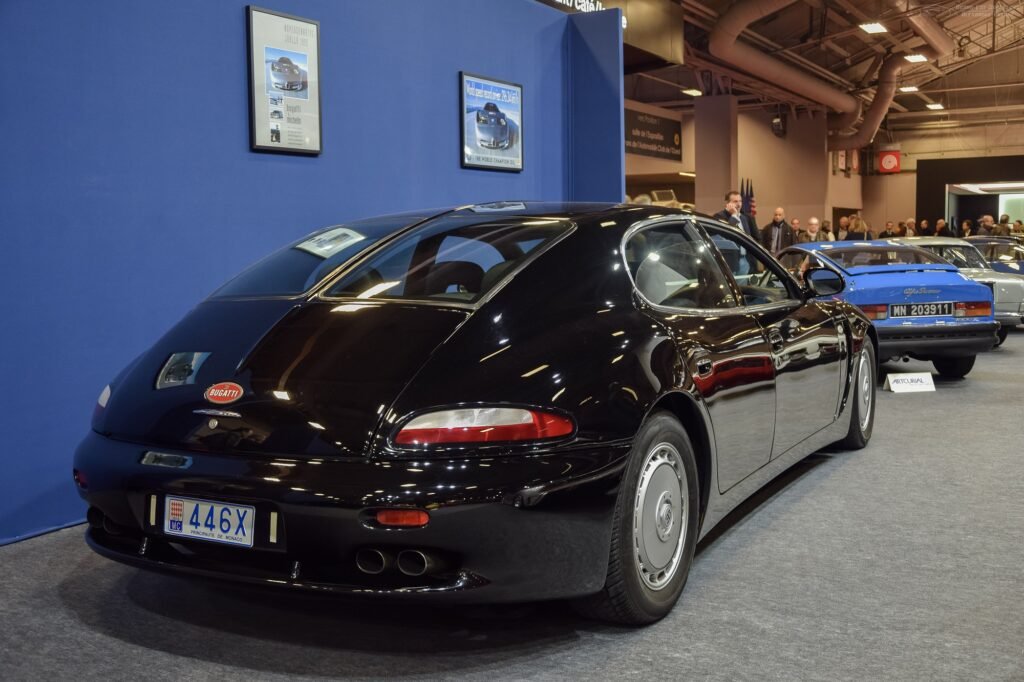
Look at the roof of that car. A rib starts on the hood, crosses the roof and splits the rear window in two. Bugatti’s press office today calls it “a stylistic nod” to the Type 57SC Atlantic. So the owner of the name had already revived the line in public, two years before Detroit showed its coupe. Chrysler’s project may have started that same year, on Tremont’s and Wyss’s dates. We have found nobody who can show that either camp was watching the other, and we looked.
Giugiaro carries the Spanish thread as well. In 1984 his studio drew the SEAT Ibiza, the first car Spain’s biggest brand developed for itself once Fiat was gone, with Karmann on the body and Porsche on the engines. SEAT, for American readers, is Volkswagen’s Spanish arm, never sold over here. He went on to the Málaga sedan and the 1991 Toledo. To a Spaniard of a certain age, the man who redrew Bugatti’s spine is the guy who designed the family car in the driveway.
A toy store, a train and eighteen cylinders
After the bankruptcy, the brand drifted until Ferdinand Piëch came shopping. Bugatti’s telling goes like this. Around Easter 1997, Volkswagen’s chairman walked into a toy store to buy his son Gregor a model Rolls-Royce. The boy pointed at another box instead: a Type 57SC Atlantic. Piëch later called it the prompt that got him interested. Volkswagen acquired the rights in May 1998. The Atlantic had now brought in two companies, and only one of them paid for the name.
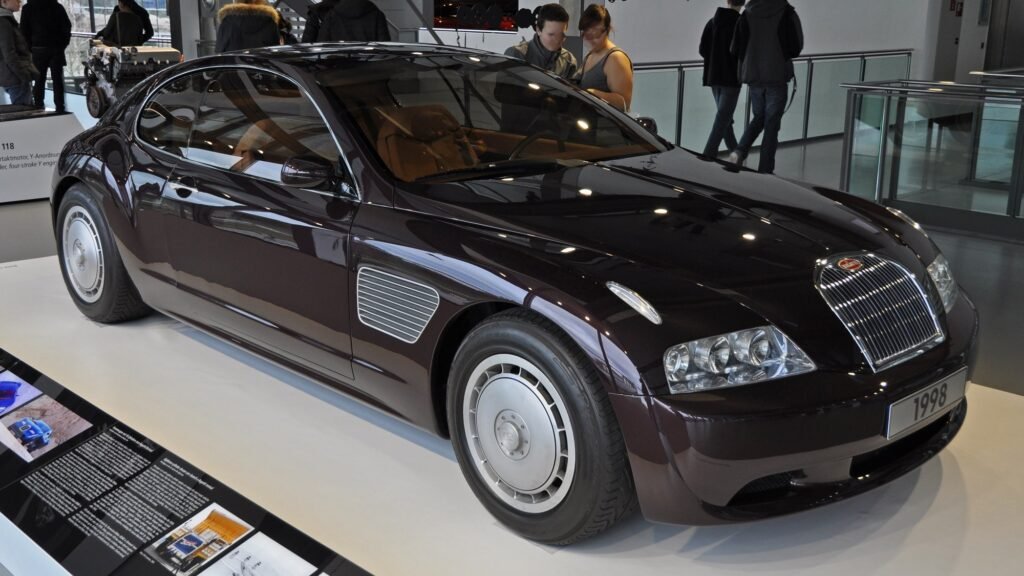
Back in 1997, on a Shinkansen in Japan, Piëch had sketched an 18-cylinder engine on an envelope. Giugiaro got the job of wrapping it. The EB118 appeared at the Paris show in 1998: a big two-door hatchback coupe with an art deco cabin and very few buttons. Bugatti says its central bulge “paid homage to the spine” of the Atlantic. Italdesign adds a practical reason, which is that the engine was so bulky the hood had to swell up from the fenders and take a rib along the middle. For a second time, a piece of mechanical necessity had drawn that line. That’s a better story than any napkin.
A W18 groups three banks of six cylinders on a common crank, so from the front it reads W instead of V. Italdesign calls it a type never before designed for a car, and Porsche has since patented a W18 of its own. Airplanes got there first, and Chicago has the receipts. On July 1, 1933, Italo Balbo led 24 Savoia-Marchetti flying boats out of Orbetello, across the Atlantic and onto Lake Michigan for the Century of Progress fair, powered by Isotta Fraschini Asso W-18s. Balbo Drive still runs through downtown, and his Roman column still stands near Soldier Field. So the only 18-cylinder W engines with a real transatlantic record came from Milan.
Bugatti’s W18 had 6.3 liters, no turbos, 555 PS (about 547 hp), and all-wheel drive taken from the Lamborghini Diablo VT. Against the EB110 GT, that’s virtually the same power from nearly twice the displacement. Motor1 gives it about 199 mph, slower than Artioli’s car had been seven years before, and Wikipedia lists 4,799 pounds, while Bugatti gives 3,461 to 3,825 for the EB110 depending on version. Volkswagen’s first Bugatti was heavier and slower than the one it had bought out of bankruptcy, which is one way to start a dynasty.
The EB218 sedan followed at Geneva in March 1999, then the mid-engine 18/3 Chiron by Fabrizio Giugiaro at Frankfurt that September. In Tokyo that October the EB 18/4 Veyron came out of Volkswagen’s own studio, drawn by Jozef Kabaň under Hartmut Warkuß, and Italdesign’s run was over. Walter de’Silva, then running design at SEAT, had his shot too: Autoblog reported in 2010 that Warkuß asked him for a proposal in 1999 and that a full-size mockup got built and rejected. It surfaced years later in the Italian magazine Quattroruote. The eighteen cylinders didn’t last either. By 2000 the plan had moved to the 8.0-liter quad-turbo W16 that reached customers in 2005 with 1,001 PS and 253 mph. Bugatti says the rib came along for the ride, subtly, on the Veyron and the Chiron.
Chrysler kept its crease
Chrysler didn’t let go either, and that’s the footnote American buyers actually got to own. In 2001 it showed the Crossfire concept in Detroit, drawn by Eric Stoddard, with a raised spine running the length of the car. Launch coverage tied it straight to the Atlantic. The production Crossfire arrived for 2004 on Mercedes SLK bones, and Karmann built it in Germany, the same firm that had engineered the bodies for Giugiaro’s Ibiza twenty years earlier. So you could finally lease the Atlantic’s crease from a dealer, with a Mercedes V6 under it and about as much 1930s romance as a rental agreement.
The car itself is harder to visit. The Walter P. Chrysler Museum in Auburn Hills closed to the public on December 18, 2016. Mopar Insiders, writing in July 2026, lists the Atlantic in the Conner Center in Detroit, the old Conner Avenue plant where the Viper was built, and that’s a fitting garage. Stellantis says it may open for select events but needs fire-code work first, and Tim Kuniskis called it “TBD.” The car does get out now and then. Motor1 saw reports of it at the Lime Rock Concours in 2023, straight-eight running, driving off under its own power.
Who took what
Chrysler built one of the best-looking cars ever to wear its badge. Jalopnik says possibly the best, and we won’t argue. But it was a costume. Bugatti’s rivets exist because magnesium refused to weld, and the EB118’s rib exists because eighteen cylinders needed the headroom. The Chrysler’s crease had no job at all, and its eight-cylinder rhythm came from a car that said “Hi.”
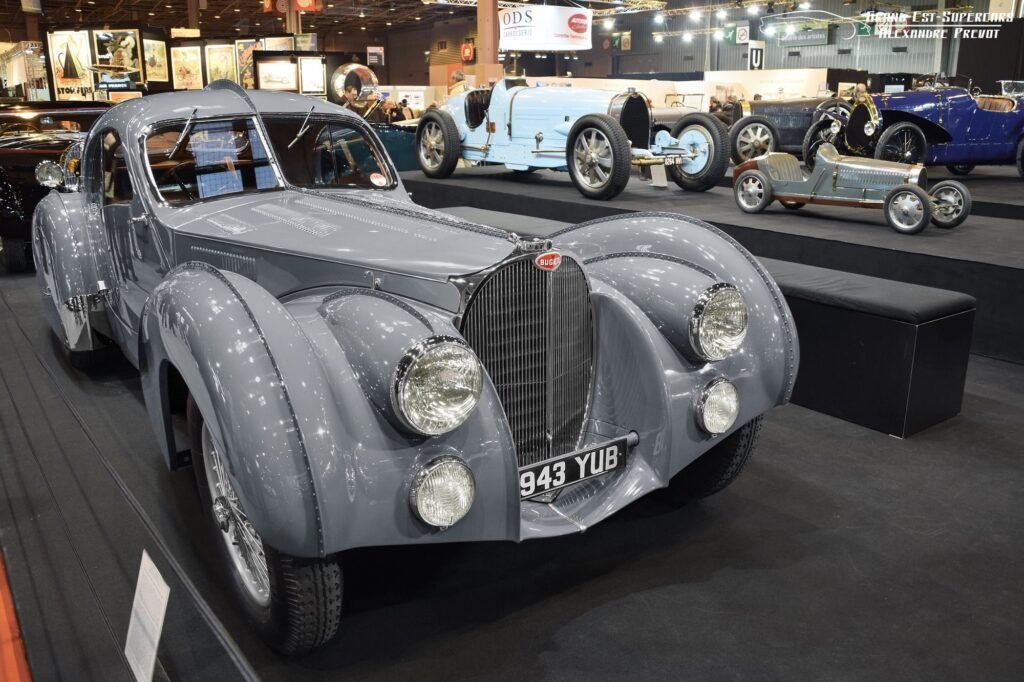
And the name? Chrysler could have called it anything. It chose the loaded word, from a company it had no business with, while that company was still breathing. If Tremont’s date is right, the name got picked while the EB110 was on sale. That Chrysler took the name is on the record. Whether anyone in Auburn Hills knew how close Campogalliano was to the wall, we couldn’t find.
We also couldn’t find a line, an interview or a memo in which anyone at Wolfsburg so much as mentions Chrysler. Giugiaro had the rib first, and Piëch’s interest started in a toy store. If there was a punch, it left no paper.
So tell us: was the EB118 Wolfsburg’s fist on the table over Chrysler’s nerve, or did Detroit never even make the room?
Check you’re still alive.
Photos: zombieite (CC BY 2.0), Tom Kredatus (public domain), Thomas Vogt (CC0), Alexandre Prévot (CC BY-SA 2.0), Stefano Mecchia (CC BY 2.0), MPW57 (CC BY 3.0).