The Man Who Saved Alfa Without Loving Cars: Nicola Romeo
Most car brands that survive a century get a fairy tale stitched onto their origin story. There’s always a founder with petrol in his veins, a workshop epiphany, a sketch on a napkin. Henry Ford watching the Model T roll out the door. Frederick Henry Royce demanding silence from a six-cylinder. Ettore Bugatti drawing horses while designing engines. The narrative arc is so reliable you could set your watch by it.
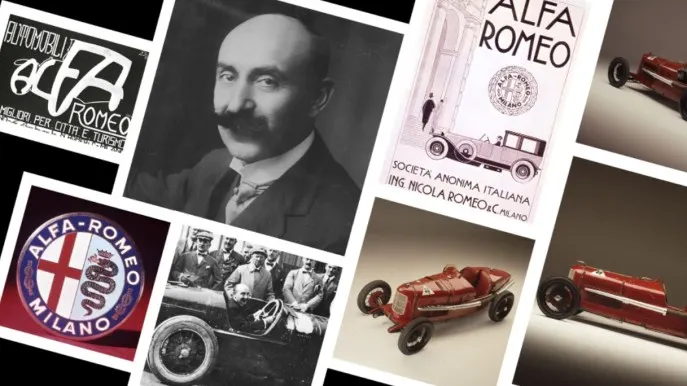
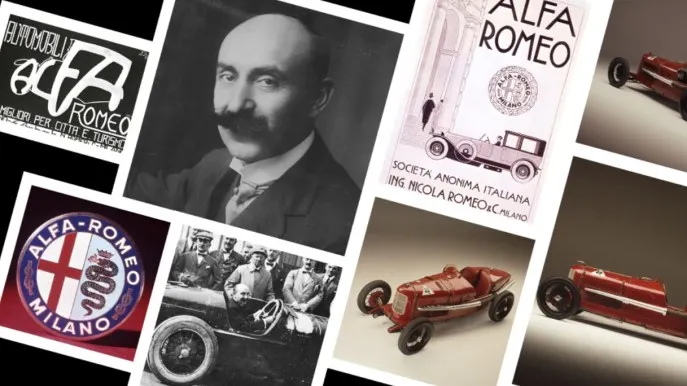
Alfa Romeo doesn’t fit. The man whose surname has been welded to the badge since 1920 was not, by any stretch, a car enthusiast. He didn’t grow up around motors. He didn’t dream about racing. When the bankers handed him the keys to a bankrupt Milanese factory in late 1915, he treated it the same way he had treated mining compressors, railway carriages and aircraft engines: as a balance-sheet problem to be optimised. And precisely because of that cold, accountant’s-eye view, he built the structure that survived him by ninety years.
This is a story the brand’s heritage department doesn’t tell often, because it complicates the romance. But if you’re going to understand why Alfa Romeo became a brand instead of a footnote, you have to understand the man who built the scaffolding. So let’s take Nicola Romeo down off his pedestal and look at him as what he actually was: an industrialist who happened to end up making cars, and who was very good at the parts of the job that nobody writes love songs about.
From mining compressors to a Milan factory
Romeo was born on 28 April 1876 in Sant’Antimo, a working-class town just outside Naples. The eldest of eight children, his father a schoolmaster, no patrimony, no shortcuts. He earned his way into the Politecnico di Napoli, took an engineering degree in 1899, and then did something most southern Italian engineers of his cohort never did: he crossed the border. He took a second degree in electrical engineering in Liège, Belgium. In 1900 electrical engineering was the cutting edge — generators, dynamos, motors, transformers — what software engineering would be a hundred years later. Romeo came back with both qualifications, working experience picked up in British and American firms, and a continental network no provincial Neapolitan could match.
He married Angelina Valadini, a Portuguese-born opera singer and pianist, in 1905. Seven children followed. One daughter was named Giulietta. Yes, that Giulietta. The Alfa Romeo nameplate that has carried the marque on its back since the 1950s is the name of the founder’s daughter. It’s the most sentimental gesture you’ll find in this entire story.
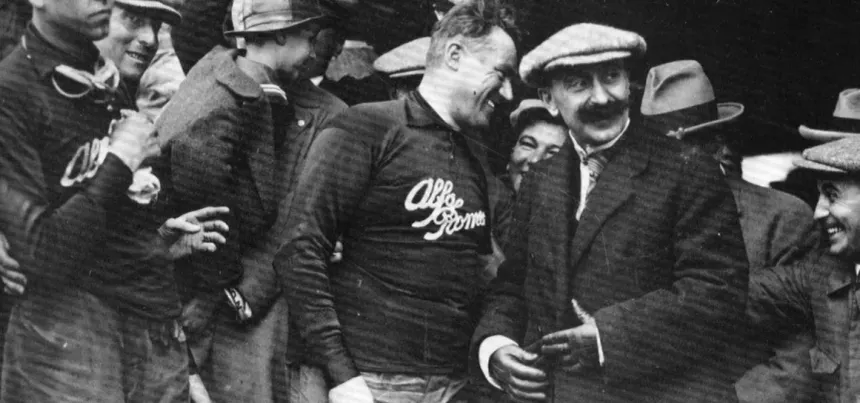
In 1911, back in Italy, he founded Ing. Nicola Romeo & Co. in Milan. Small company, no glamour: mining compressors, air-handling equipment, drilling kit for Italian extraction industries. But before Alfa, before the shells, before any badge with a snake on it, Romeo was already building the kind of CV that mattered to Milanese bankers. He engineered the first high-voltage electric railway line between Rome and Tivoli, a serious piece of infrastructure work. He installed compressed-air machinery in the Carrara marble quarries, transforming extraction productivity. He supplied the ventilation systems for the long-distance railway tunnels carving through the Apennines. They nicknamed him “the Siren”, the story goes, for an almost hypnotic capacity to win over interlocutors in business negotiations. By 1914 he was a known quantity in Milanese industrial circles. Profitable firm, healthy order book, on speaking terms with the right banks.
This is the man the Banca Italiana di Sconto picked up the phone to in late 1915 when A.L.F.A. defaulted. Not a car person. A factory operator with cash, credit, and a track record of delivering what the army was paying for.
How to acquire a brand without paying for it
The takeover of Portello on 2 December 1915 wasn’t dramatic. It was a leveraged transfer engineered by the bank that held A.L.F.A.’s debt. The bankers wanted out. Romeo wanted access to a 6,700-square-metre factory with smelting capacity, machine tools and skilled labour, conveniently located in the industrial heart of the country and conveniently empty. He took it on terms that suited him. The new entity that ran Portello was a partnership under his own name. The old A.L.F.A. trademark went into limbo.
What he did with Portello over the next three years is the part of the story brand-history pages tend to gloss over. He didn’t restart car production. He didn’t romanticise the place. He didn’t summon Merosi and ask him to dust off the 1914 GP engine. He paused civilian work entirely, retooled the factory, hired foundry men and pattern-makers, and brought in American machine tools to expand the smelting works. Then he started making war materiel for the Italian army.
Four documented production lines came out of Portello between December 1915 and November 1918. Artillery shells for the Alpine and Isonzo fronts, the bread and butter of the contract. Aircraft engines: under a Ministry of War contract, Portello built 300 V6 Isotta Fraschini engines under licence, destined for Italian bombers. By the end of the war Romeo’s engineers had also developed an in-house prototype, a 600-horsepower V12 aero engine, which never reached series production but laid technical groundwork the company would draw on through the 1920s when it took up Bristol Jupiter and Armstrong Siddeley Lynx licences. Portable compressors for combat engineers and sappers — Romeo’s bread-and-butter business from his pre-war Milan firm, now scaled up for trench warfare. And, less comfortably for the official narrative, flamethrowers for close-quarters combat in the Alpine trenches against Austro-Hungarian positions. Specific unit numbers I haven’t found in serious documentation, so I won’t make them up. But the four lines themselves are confirmed by Stellantis Heritage’s own historical record.
The numbers around all this matter. The workforce went from a few hundred when he took over to more than 1,200 by 1918. Floor space close to doubled. New foundries went in. The infrastructure that would build racing Alfas in the 1920s was paid for by shell production from 1916 to 1918. Awkward for a heritage poster. But financially, it’s the truth. Without those four years of war profits, there is no post-war Alfa.
Building an industrial group around the bankrupt carmaker
Romeo wasn’t satisfied with running a single converted car factory. While Portello was making shells, he was using the cash flow to buy other industrial assets. Three acquisitions defined the Romeo group:
The Costruzioni Meccaniche di Saronno, a German-owned railway engineering plant that wartime trading-with-the-enemy regulations made available for purchase. Locomotives, rolling stock, rail components.
Officine Meccaniche Tabanelli in Rome, another mechanical engineering plant.
Officine Ferroviarie Meridionali in Naples, a railway works in his home region.
After the war he added licensed production of Titan tractors under an American programme aimed at modernising Italian agriculture, plus industrial drilling equipment and various rail-related manufacturing. The pattern is clear: Romeo wasn’t trying to be a car magnate. He was building a vertically integrated industrial group, and Alfa was just one factory among several.
When the war ended in November 1918, Portello had a problem. The military contracts dried up. There was a vast factory, more than a thousand workers, modern machinery, and nothing immediately profitable to make. The cleanest commercial answer would have been to mothball it and reassign capacity to the railway works. Romeo nearly did. What stopped him was an inventory check. In a corner of Portello there were components for 105 partly-built chassis that had been left half-finished in 1915 when the war shut civilian production. Five years of stored steel and castings sitting in a warehouse.
That was money on the floor. Romeo wasn’t about to leave it there. He ordered the cars to be completed.
The naming dispute that named a marque
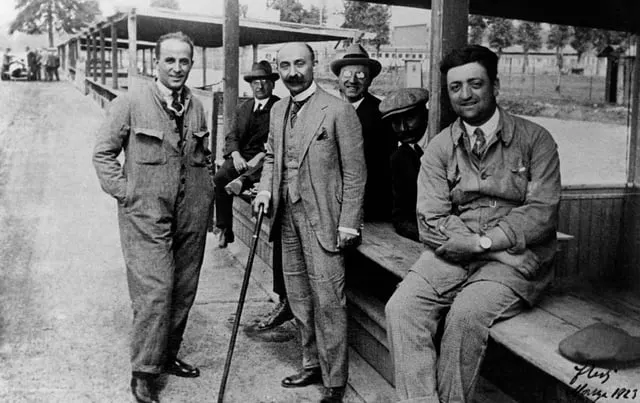
Here’s a detail nobody tells you. When Romeo restarted car production in 1919, he discovered that the A.L.F.A. trademark wasn’t legally his. The previous shareholders still held rights to the brand. There was a legal scrap. Romeo, ever the negotiator, found a workaround that suited everyone: he took the existing brand, “Alfa”, and welded his own surname onto it. Alfa Romeo.
That’s the actual reason the marque has its compound name. Not romantic vision. Not corporate poetry. A trademark dispute with the previous owners that got resolved through a hyphenation. The new badge became official in 1920.
The first 95 of those mothballed chassis (some had degraded beyond rescue) were completed and sold as the Alfa Romeo Torpedo 20-30 HP. Four-cylinder, 4,250 cc, side valves, around 67 horsepower, three times the price of a Ford Model T. First car ever to wear the Alfa Romeo badge. Year: 1920.
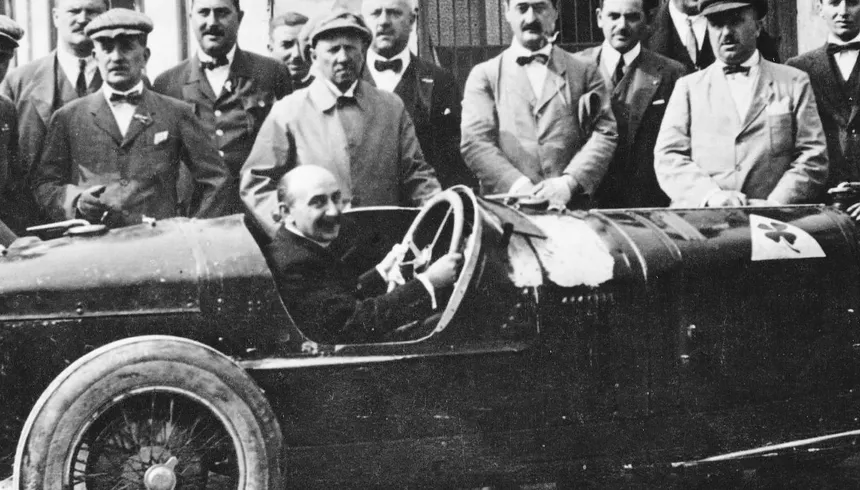
But that 20-30 HP Torpedo wasn’t really a 1920 car. It was a 1914 design by Merosi, completed six years late, with a new badge stuck on the radiator. The first car designed from scratch as an Alfa Romeo was the 20-30 ES Sport of 1921-1922. Shorter wheelbase, electric lights, electric starter, sportier intent, 124 examples built. And here’s the connection that makes the story start to feel familiar: in the 20-30 ES Sport, a young driver called Enzo Ferrari took his first works rides for Alfa, alongside Antonio Ascari (father of future world champion Alberto) and Ugo Sivocci. Three names that would shape twentieth-century motorsport, all of them piloting the first car ever to carry Romeo’s surname. That wasn’t an accident. Romeo understood that an Italian carmaker needed Italian drivers visible in Italian races. It was marketing, but it was also industrial policy.
The decision that defined Alfa for fifty years
Here is where Romeo earned his place in motoring history, and it had nothing to do with engineering. After modest competition success — Ferrari finished second in the 1920 Targa Florio, and Alfa took first, second and fourth in the 1923 Targa with the new RL — Romeo arrived at an uncomfortable conclusion. Merosi was an excellent road-car designer, but he wasn’t going to win Grand Prix.
Modern Grand Prix racing was about to require a different kind of mind. Lighter chassis, supercharged engines, race-purposed thinking from the start. Merosi, brilliant as he was, came from a road-car tradition. The man Romeo wanted was Vittorio Jano, then at Fiat in Turin, the engineer behind some of the most successful racing engines of the early 1920s. The operation was largely piloted by Enzo Ferrari himself. Ferrari knew Jano from Turin, knew his work intimately, and was the one who actually went to convince him to switch sides. But the cheque, the political risk and the strategic call all sat with Romeo. Without Ferrari there is no approach. Without Romeo there is no signature.
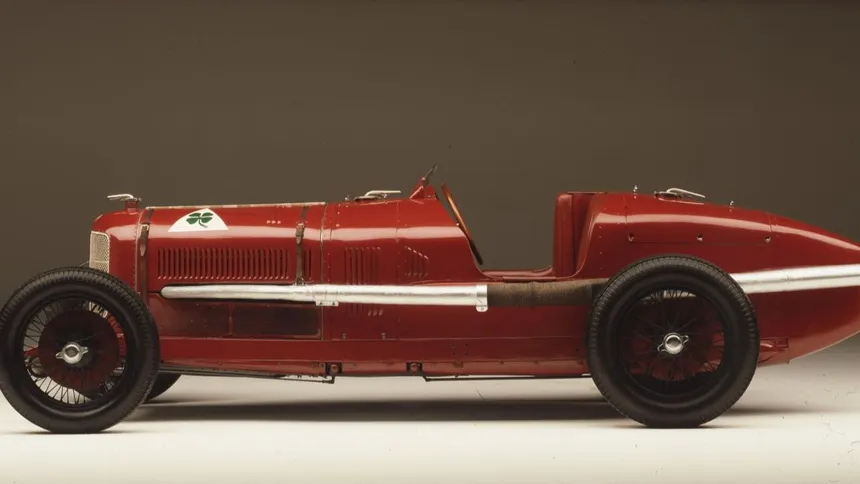
He pulled it off. Jano arrived at Alfa in September 1923. The P2 followed within two years, and won the inaugural World Manufacturers’ Championship of 1925.
What happened to Merosi is the part the official version dispatches in a sentence and which deserves a paragraph. The textbook line is that he was “reassigned to touring cars.” That isn’t quite right. Merosi was transferred out of Alfa altogether, to the Railway Workshops in Naples, one of the other companies in Romeo’s industrial group. Far from Milan, far from Portello, far from cars. Back to the south, yes, but also onto a sideline. The man who had effectively built the marque from the wreckage of A.L.F.A., who had signed off on the 24 HP, the 12 HP, the 40-60 HP, the 1914 twin-spark Grand Prix engine and the championship-winning RL, was quietly walked out of the building. No public falling-out, no bitter newspaper interviews. He died in 1956, aged 84, never having returned to the front line of motor industry. If there was personal hurt in that reassignment, he kept it to himself. Romeo didn’t throw him a farewell dinner. He paid him what he was owed and sent him to Naples. Cold, but clean. That’s the Romeo signature: handle human transitions like balance-sheet transfers. Saves drama, breaks hearts. Both at the same time.
That is the act that defines Romeo as a manager. He didn’t sentimentalise the engineer who built the company. He didn’t wait until the situation was disastrous. He saw that the next phase needed a different brain, and he made the swap cleanly. Most owners can’t do this. Most owners hold on to their original technical talent for a decade too long out of misplaced loyalty, and the marque pays the price. Romeo didn’t.
He never grandstanded about it either. There are no famous Romeo quotes about the P2. No photographs of him holding the trophy. He stayed where he belonged, in the office, signing contracts. The romance was for the drivers, the engineers, the press. The numbers were his job.
Decline, exit, and a Senator’s death
Romeo’s exit from Alfa Romeo in 1928 wasn’t a clean retirement. It wasn’t a brutal sacking either. It was both, and the official version dispatches it in one sentence which doesn’t do justice to what actually happened.
The root cause wasn’t inside Alfa. It was inside the bank. The Banca Italiana di Sconto, Alfa’s principal creditor and institutional shareholder since 1915, collapsed in 1921 in one of interwar Italy’s largest banking failures. That collapse pulled the financial floor out from under the post-war Alfa Romeo. Romeo was forced into a series of rescue operations and refinancings that, in hindsight, didn’t work. The losses fed back into the wider Romeo group. By 1927 Alfa Romeo was close to liquidation.
In a tense board meeting that year, the new shareholders and creditors asked Romeo to step down from operational management. Pasquale Gallo was appointed as the new managing director and offered Romeo a face-saving role as figurehead president, no real executive power. Romeo, a man of pride but also of cold calculation, accepted at first. A few months later he understood the role was empty and severed all ties in 1928. No public drama. No newspaper interviews. He retreated to his house in Magreglio, a village above Lake Como, and from there stayed involved in other companies of his industrial group and in southern-Italian railway projects until the end.
The five years between Romeo’s exit and the nationalisation deserve more than a line, because the standard tellings collapse them into one. They were not one event. Gallo lasted barely a year before being replaced by Prospero Gianferrari, who tried to diversify the company’s way out of the hole — the first non-passenger industrial vehicle, the Tipo 50, came in 1931, and the first wholly Alfa-designed aero engine, the D2, came in 1932. None of it was enough. The 1929 Wall Street crash rolled across Europe and gutted whatever recovery the Italian premium car market might have managed. By 1932 Alfa Romeo was virtually bankrupt despite Jano’s 8C 2300 winning everything in sight on track. That is the bitter irony at the heart of this period: the most beautiful and successful racing cars Alfa had ever built were rolling out of a factory whose accounts were collapsing.
The IRI was not created specifically to save Alfa. It was set up by Mussolini’s regime as a wider mechanism to absorb the toxic loans Italian banks had extended to industrial firms during the post-war years and that the Depression had turned into write-offs. Alfa Romeo, by 1933, was one of those bad debts. The state took the company on not as a romantic rescue but as a side effect of a banking bailout. From 1933 onwards, Alfa was a state-owned enterprise, technically still a private corporation with its own board but with the IRI calling every meaningful shot. Competition responsibilities were outsourced to the newly formed Scuderia Ferrari, which is the kind of detail that should make any Alfa historian smile: Enzo Ferrari, the man Romeo had relied on to bring in Jano in 1923, came back in 1933 as the contracted operator of Alfa’s racing programme. The state-owned phase would last fifty-three years, until the Fiat takeover in 1986. But that is another article.
Romeo had been appointed Senator of the Kingdom of Italy back in 1925, at the height of the P2’s competition success — a recognition that was as much political as industrial but that captured how heavily he weighed in interwar Italian industry. He died on 15 August 1938 at his home in Magreglio, aged 62. Two years before Italy entered the Second World War. Two years before Portello, the factory he had transformed twice, started producing weapons again under different management.
What this man left, looked at from underneath
I work with my hands for a living and I’ve got a working theory about industrial brands. There are two ways you can save a marque from going under: the romantic way and the cold way. The romantic way is Enzo Ferrari building a private myth around his own obsession and turning the personality of the founder into the personality of the brand. The cold way is Nicola Romeo buying a bankrupt factory because the bank made it cheap, and then running it like the mining-compressor business he already knew how to run.
Both methods can work. Only one of them survives the founder.
Brands built on the passion of a single man die with that man, or get watered down beyond recognition by his successors. Brands built on industrial structure — capital, machinery, contracts, supply chains, racing programmes that exist independently of any one person — those last. Alfa Romeo survived Nicola Romeo because Romeo never wanted it to depend on him. He wanted it to depend on the factory, on the engineers, on the contracts, on the drivers, on the prestige. On things that don’t die when the owner dies.
When you hear someone today talk about “the soul of Alfa Romeo”, they’re talking about something a cold Neapolitan electrical engineer planted as a side effect of a calculated industrial transaction. Romeo didn’t put a soul into Alfa. What he put in was bone structure. Factory walls. Capital. Foundries. He let the soul find its own way in, brought by Merosi, by Jano, by Ferrari, by Sivocci, by Ascari, eventually by Nuvolari. By the men who came afterwards.
That’s the lesson I take from this story when I look at it from the workshop floor. Brands aren’t saved by the romantics. They’re saved by the industrialists who know how to build the house. And Romeo, that Neapolitan with two engineering degrees and a habit of buying companies in trouble, built the best industrial house in Italian motoring of the 1920s.
The pretty stuff came later. But without the house, no Jano draws a P2. No Sivocci paints a green cloverleaf on a chassis. No Nuvolari takes on the Silver Arrows at the Nürburgring. The badge with the snake exists because a man who didn’t really care about cars made sure the factory did.
That’s worth saying out loud. Even if it spoils the fairy tale.
Check you’re still alive.