
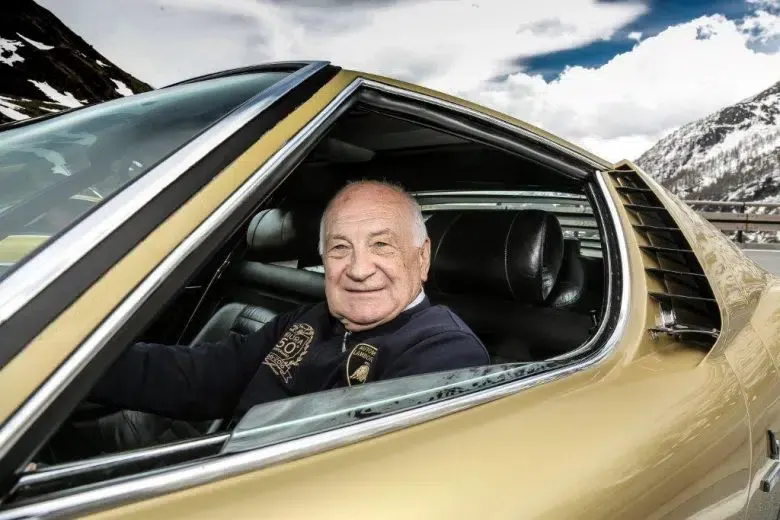
Paolo Stanzani: “I’m Tired of Building Toys for Rich, Spoiled People”
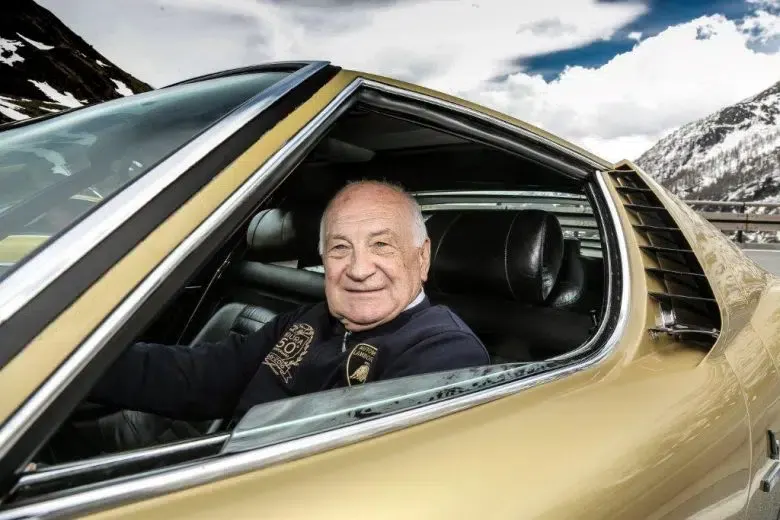
The Lamborghini Miura exists because two young Italian engineers were obsessed with a race car built in Dearborn, Michigan.
That’s not a stretch. Ferruccio Lamborghini had explicitly forbidden his staff from building anything resembling a competition car — racing was an expense he had no interest in. So Gianpaolo Dallara and Paolo Stanzani did the next best thing: they designed a street supercar modeled on the Ford GT40, which had been racing since 1964 and would take Le Mans in 1966. The V12 went in sideways to keep the wheelbase short. The chassis Dallara drew could have gone straight to a grid.
One of those two engineers went on to run the whole company, design the Countach, engineer BMW’s most influential concept car, and lay out the Bugatti EB110. Then he quit that too.
His name was Paolo Stanzani, and almost nobody in America knows it, because he kept doing the one thing that gets an engineer written out of the story: he left.
A five-year-old and a delivery truck
Stanzani was born in Bologna on July 20, 1936. The first vehicle he ever operated was the delivery truck his father drove for a courier company. He was five. He got it started and got it moving. Steering it proved harder.
As a teenager he started inventing. In the early 1950s he built a cable system to make a car’s headlights swivel with the steering. He offered it to FIAT, which passed. Directional headlights showed up on the second-generation Citroën DS in 1967. At seventeen he patented a milk boiler designed to stop milk from boiling over, sold the patent to a company, and bought a motorcycle with the proceeds. Sources vary on his exact age and on which bike.
He finished his mechanical engineering degree at the University of Bologna in the early sixties — accounts differ between 1961 and 1962 — and stayed on as a faculty assistant. His professor eventually mentioned that some industrialist had gotten it into his head to build cars and was hiring. The industrialist was Ferruccio Lamborghini, and the pitch amounted to a single question: what exactly was he doing at the university?
He joined Automobili Ferruccio Lamborghini on September 30, 1963. The company had precisely two engineers. The other one was Gianpaolo Dallara, who had been there about a month.
Civilizing a race engine
His first job was making Giotto Bizzarrini’s V12 fit for public roads. The engine was too highly strung for a grand tourer, so Stanzani went at the connecting rods, the camshafts, the lubrication system and the carburetor layout until the thing could be driven by a customer rather than a professional.
Through 1967 his brief covered structural calculation, the Reparto Esperienze — engine dyno rooms, road testing, homologation — and the relationships with the outside coachbuilders Lamborghini depended on: Touring, Bertone, Marazzi, Zagato, Silat. The 350 GT, the 400 GT and the Islero all passed through his hands.
Then came the Miura. Stanzani owned the technical development and the homologation, which is the unglamorous half that turns a workshop idea into something a dealer can legally sell. Without it, the Miura is a story about a prototype.
The promotion nobody explains properly
By mid-1967 he had replaced Dallara as technical director and had also been made general manager of the company. The tidy version calls this a promotion. The real version is better.
Lamborghini’s automotive division was being overseen by executives who also ran the tractor and heating businesses, and who had no interest in watching sports cars burn money that belonged to the profitable side of the house. Ferruccio solved the internal fight by cutting the car division loose and handing it to a thirty-one-year-old engineer.
What he inherited was a mess. Touring had closed, so the coachbuilding relationships had to be rebuilt. Dallara was leaving. And the entire engineering program had to be reworked around new American emissions and safety legislation, which at that moment was rewriting the terms of business for anyone who wanted to sell in the United States — the market Lamborghini could not afford to lose.
The Espada, the Jarama, the Miura S, the Miura SV and the Urraco were all built under his direction.
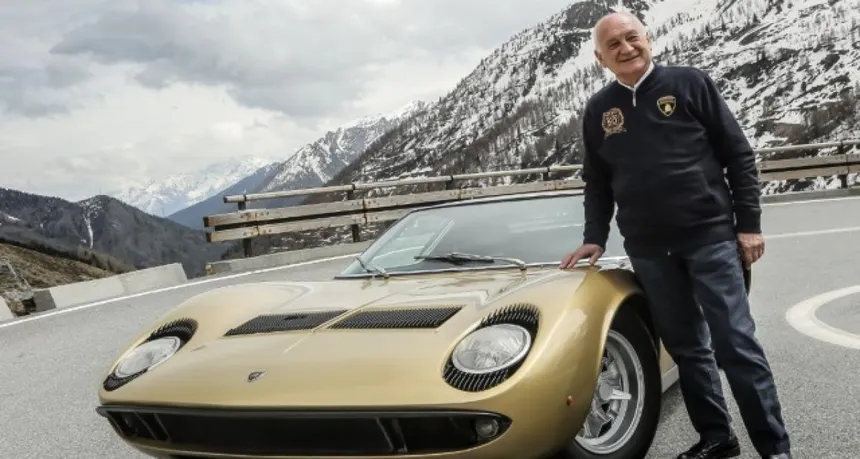
The Countach, and how you mount an engine backwards
The Countach was the first car Stanzani carried through without Dallara beside him.
The decision that defines it is the powertrain layout. It used the Miura’s V12, but installed longitudinally and with the gearbox ahead of the engine, poking forward into the cabin. That bought three things: a shorter car, mass concentrated in the middle of the wheelbase, and the option of adding all-wheel drive later, which never happened. The driveshaft ran back through the sump to reach the rear axle.
There’s a smaller detail that says more about him. To avoid spoiling the shape Gandini had drawn, Stanzani deleted the vertical carburetors that stuck up out of the Miura’s engine bay. A technical director redesigning the induction so the bodywork stays clean is not standard behavior in any era.
His stated motto: do today what everyone else will do tomorrow.
The Countach’s development ran straight into the company’s collapse. Ferruccio sold 51% to Swiss businessman Georges-Henri Rossetti in 1972, which left engineering with no money and nobody to argue with. Stanzani’s response was to build the new car entirely in-house rather than depend on suppliers who might not get paid. That’s why three years separate the 1971 Geneva LP500 prototype from the production car.
He also designed 7- and 8-liter engines intended as the Countach’s future. No car ever got them. They ended up in offshore powerboat racing, because the automotive industry turned toward multivalve heads and fuel injection instead.
He left in 1974, after the company rejected his proposal to productionize the Bravo concept shown in Turin that year — a more attainable Countach that Lamborghini badly needed and never got. Sources split between 1974 and 1975 on the date.
The BMW nobody credits him for
While still at Sant’Agata, Stanzani engineered the BMW Turbo, the Paul Bracq–designed concept Munich unveiled around the 1972 Olympic Games. The structure came from the Urraco and the engine was a 2.0-liter four derived from the 2002tii. Six years later the shape resurfaced as the BMW M1.
Lamborghini’s chief engineer quietly engineering BMW’s most consequential concept car, while running Lamborghini, is the kind of fact the official histories walk right past.
Tractors by Gandini, and the checks he refused
What he did after Lamborghini is the part that explains the man.
He turned down running the Alfasud plant at Pomigliano d’Arco — by his own account, he was tired of building toys for rich, spoiled people. He went to work on the Ridracoli dam near Forlì, in the Apennines. The engineer who put a V12 sideways behind the driver’s head spent that stretch on concrete and water.
He set up a small engineering office called Tecnostile in 1979, where he did tractors for Itma — styled, of all people, by Marcello Gandini — and a Lancia Beta HPE customized by Nicola Trussardi. Between 1979 and 1986 he took contract work for Renault, Alfa Romeo and Suzuki.
And he said no to a lot. A Cartier-branded sports car with Jaguar power. A Bulgari minivan with Alfa Romeo mechanicals. Two checks anybody else would have cashed.
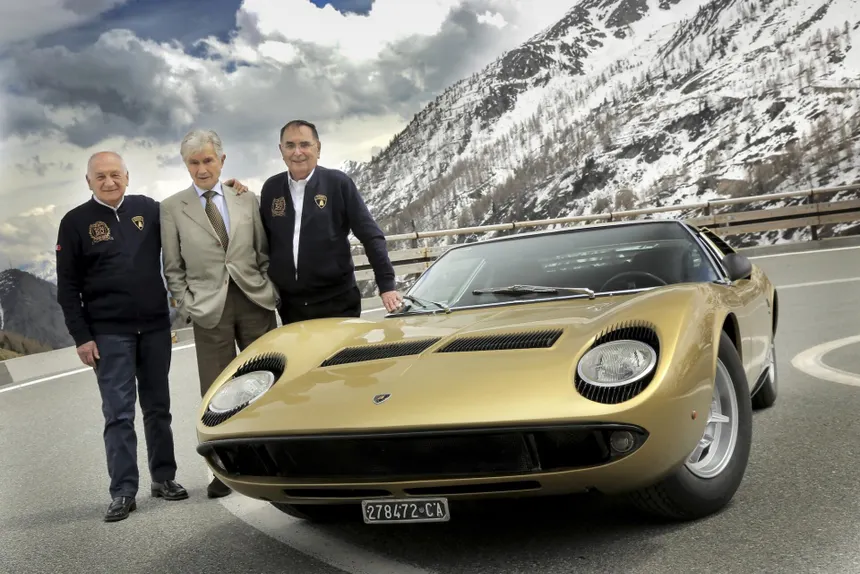
Bugatti: the car that was almost named Ferruccio
His friendship with Ferruccio Lamborghini held, and by the 1980s the two were kicking around the idea of doing another car together. The money man turned out to be Romano Artioli, a Ferrari dealer and Italy’s Suzuki importer through Autoexpo, who proposed reviving the Bugatti name. Ferruccio wanted the car to carry his own first name. He didn’t get his way, so he stayed out.
Stanzani came in as sole administrator, technical director and minority shareholder of Bugatti Automobili. He brought in Loris Bicocchi from Sant’Agata as test driver. And he laid out the EB110: a 3.5-liter V12 with five valves per cylinder and four turbochargers, 550 hp, all-wheel drive and an aluminum chassis.
But as the Campogalliano factory went up, the minority shareholder ran the numbers and didn’t like them: enormous sums were going into the building before anyone had settled what would be produced inside it. Then came a capital increase he was asked to fund, and Artioli’s decision to move to a carbon fiber structure — a material Stanzani didn’t trust on strength grounds. He walked in July 1990, more than a year before the EB110 was unveiled in September 1991 on the 110th anniversary of Ettore Bugatti‘s birth. Nicola Materazzi, the engineer behind the Lancia Stratos and the Ferrari F40, replaced him.
So the fastest production car in the world at the time of its launch was laid out by a man who wasn’t there to see it roll out.
Imola, 1994
His last chapter was Formula 1. He came in for 1991 with Giuseppe Lucchini’s Scuderia Italia, running Dallara chassis, and immediately discovered he wasn’t allowed to touch the engine — supply contracts barred any team interference. An engineer, forbidden from opening the motor.
The team finished eighth in the constructors’ championship that first year, with JJ Lehto taking third at San Marino. Ferrari V12s followed in 1992, then a scoreless 1993 on Lola chassis despite having Michele Alboreto and Luca Badoer on the books. The 1994 merger with Minardi made Stanzani vice president.
Which brings us to the 1994 San Marino Grand Prix.
Roland Ratzenberger died on Saturday. Ayrton Senna died on Sunday. With the race still running, the right rear wheel came off Alboreto’s Minardi — Stanzani’s own team’s car — as it left the pits, striking Ferrari and Lotus mechanics who ended up in the hospital. Gerhard Berger, Niki Lauda and Bernie Ecclestone went to race control asking for the thing to be stopped. They were refused.
Stanzani asked too, except he did it live on Italian national television, with RAI’s microphone in front of him and the country listening. He called for the race to be halted. Ecclestone reprimanded him for it afterward.
He left Formula 1 in 1995 when Lucchini pulled out. Then he founded Cogenergy, a company designing renewable energy generation plants.
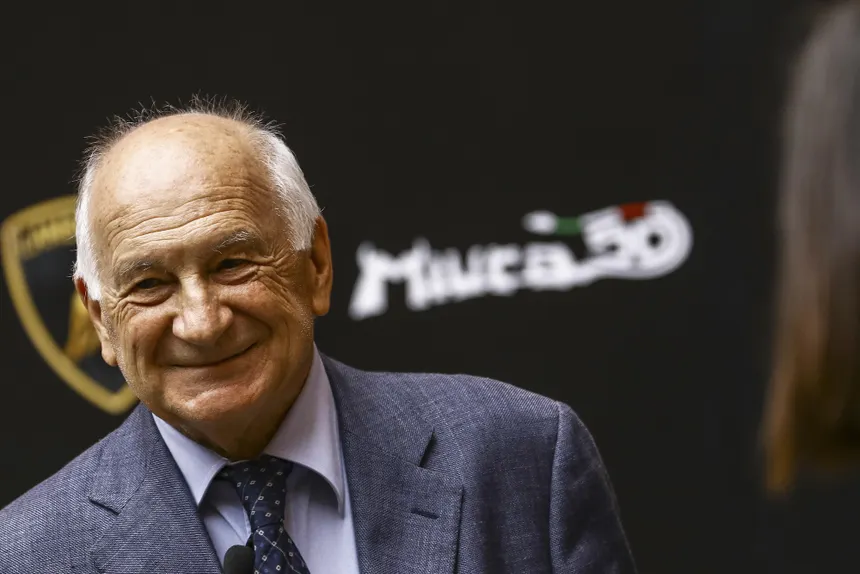
Stanzani died in Bologna on January 18, 2017, following surgery. He was eighty, though several outlets reported eighty-one. A year earlier he had celebrated the fiftieth birthday of the car he helped create.
What’s left
Davide Cironi interviewed him at the Lamborghini family museum in Funo di Argelato. He’d been warned to bring twenty prepared questions because the engineer was private and would stop every couple of sentences. Stanzani talked for three hours with almost no prompting. Ferruccio’s schemes, the Pirelli business, his old professor, the factory — all of it. One episode was still pending, dedicated entirely to Bob Wallace, which Stanzani wanted to record. They ran out of time.
On why he never took a salaried job again after Sant’Agata, he gave his own answer: finding another employer like that one was impossible.
And here’s what matters about this man beyond the cars. Stanzani spent his career saying no. No to running Alfasud. No to a Cartier sports car. No to a Bulgari minivan. No to Artioli’s carbon fiber. No to staying at a Lamborghini whose new owner had neither money nor judgment. And no, out loud and on national television, to a race continuing after two people had been killed at it.
Every one of those refusals cost him money, position, or both. Together they explain why the man who engineered the Miura, the Countach and the EB110 has no model named after him and no museum wing. Engineers who stay in their chairs until the end get their names on plaques. Engineers who stand up when a project stops making technical sense get an obituary and not much else.
In today’s industry, with product cycles chained to five-year financial plans, a man like that never makes department head. They call him difficult by the second meeting.
Check you’re still alive.
1 thought on “PAOLO STANZANI”